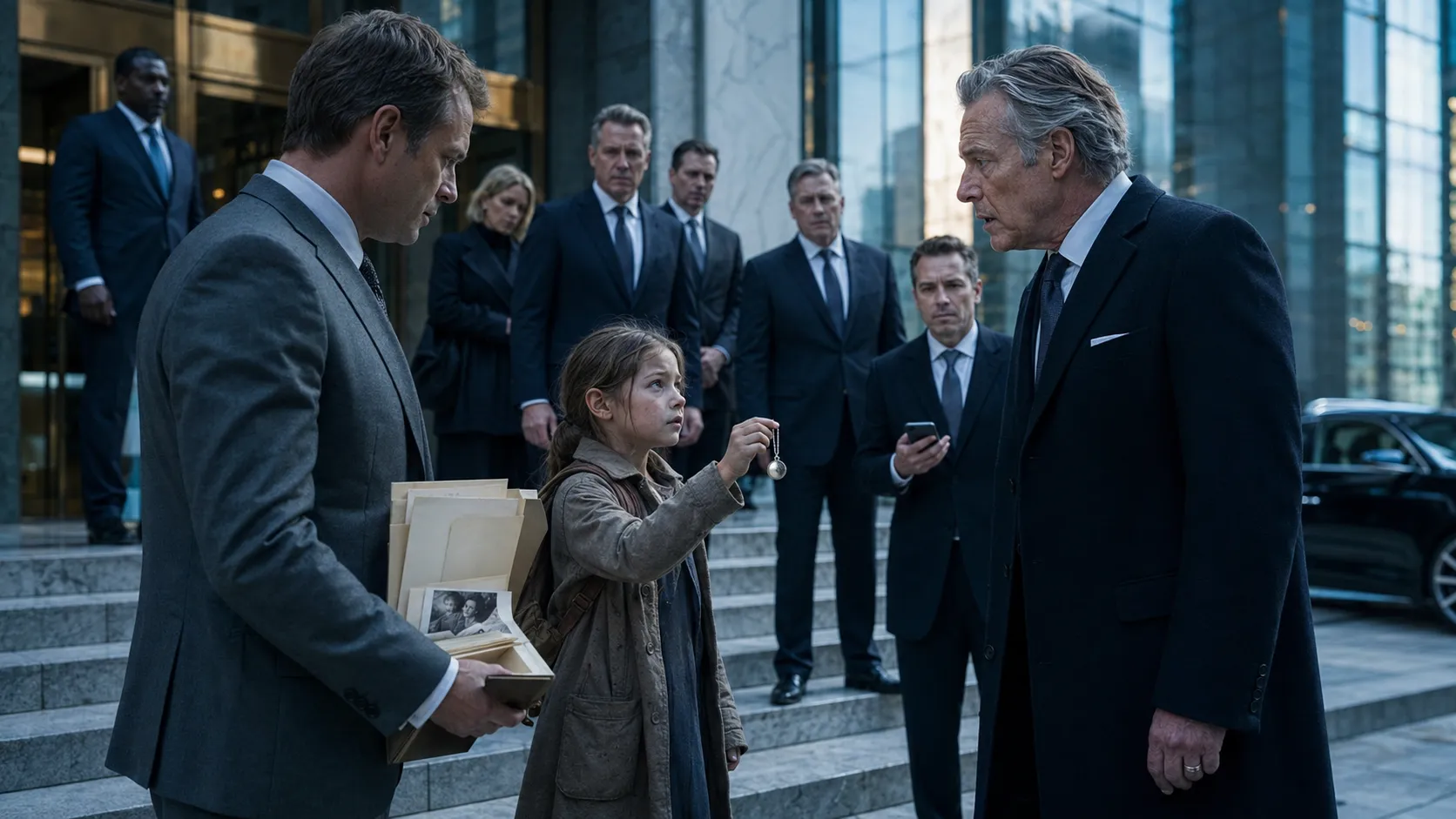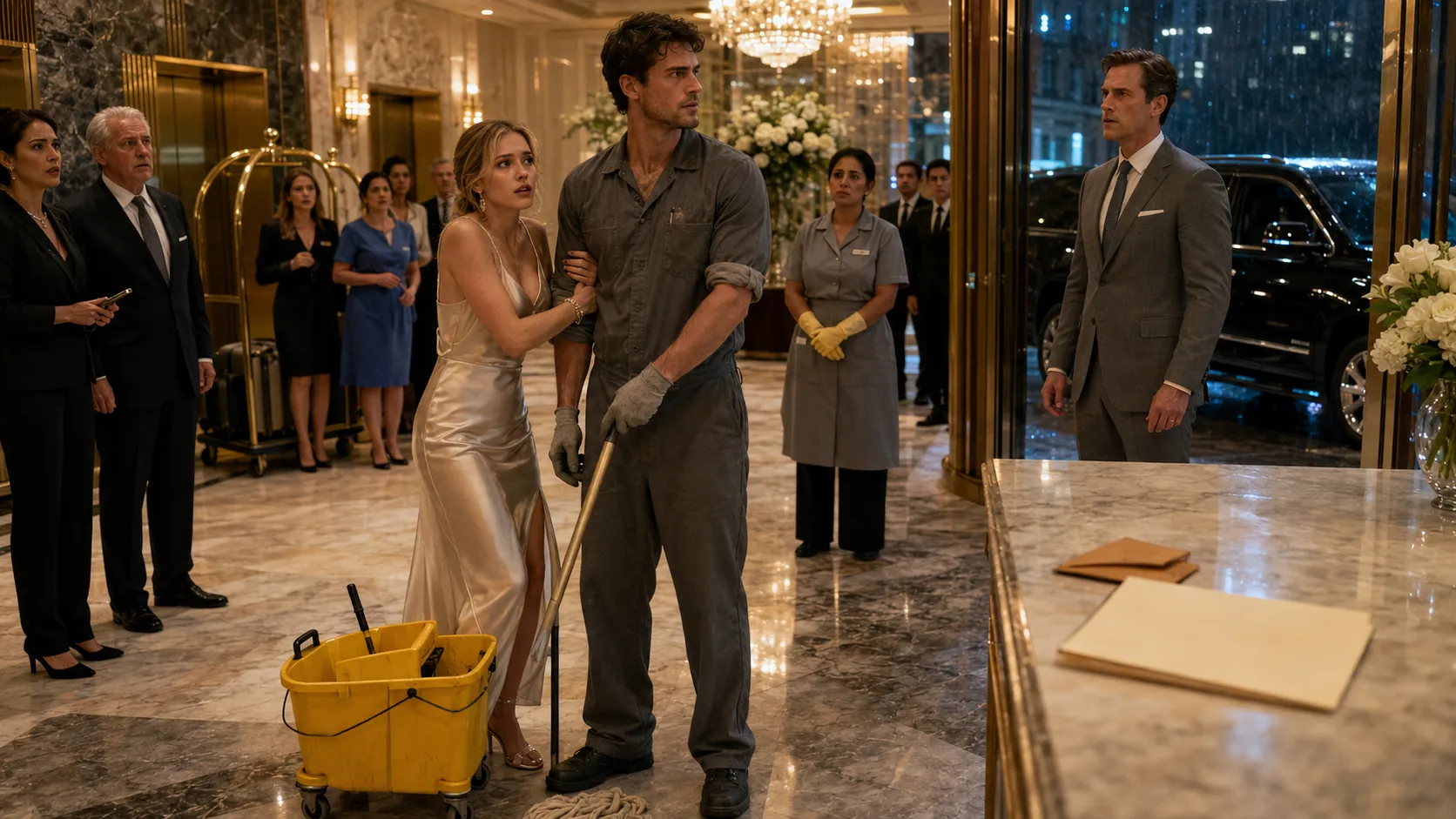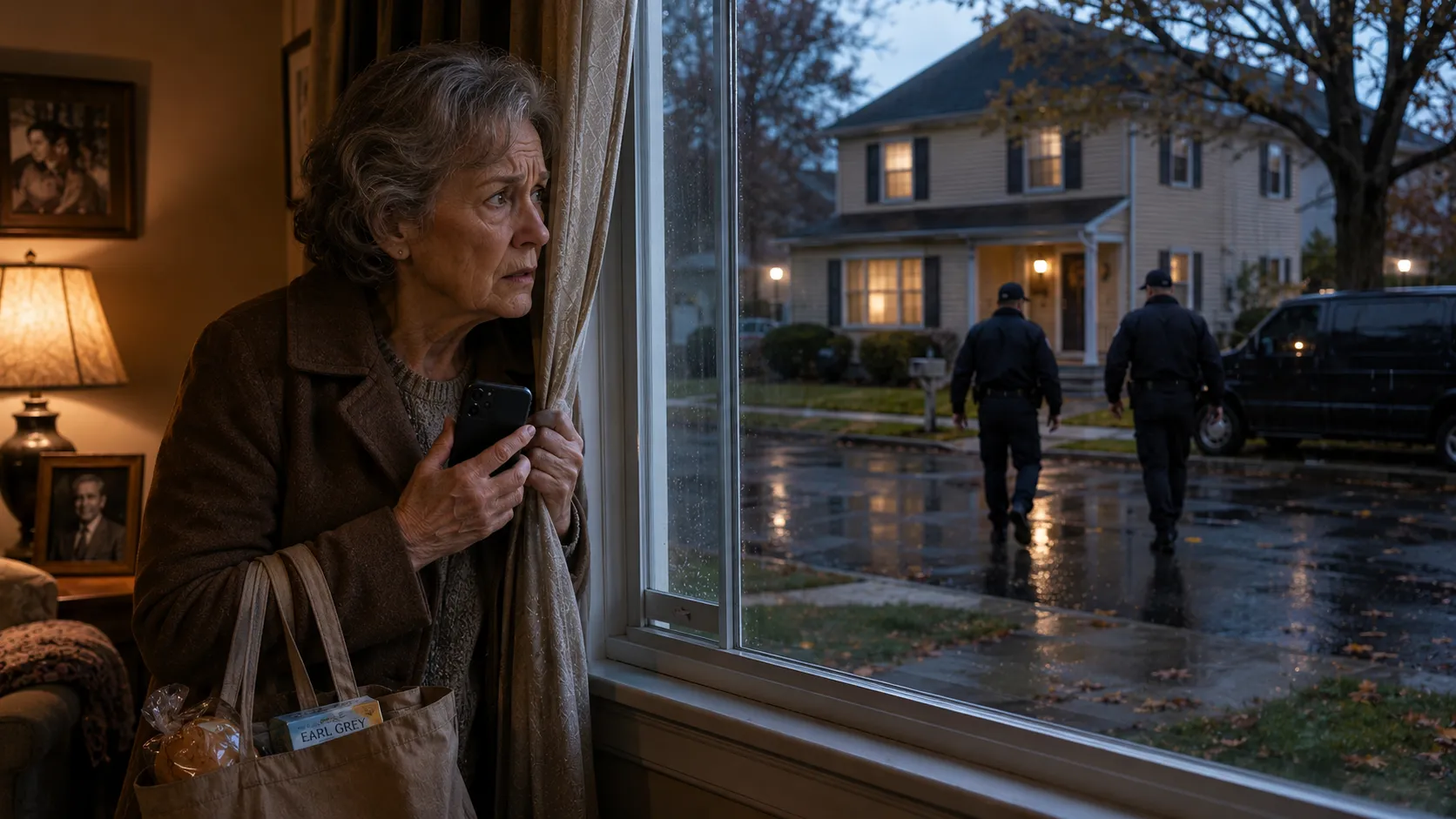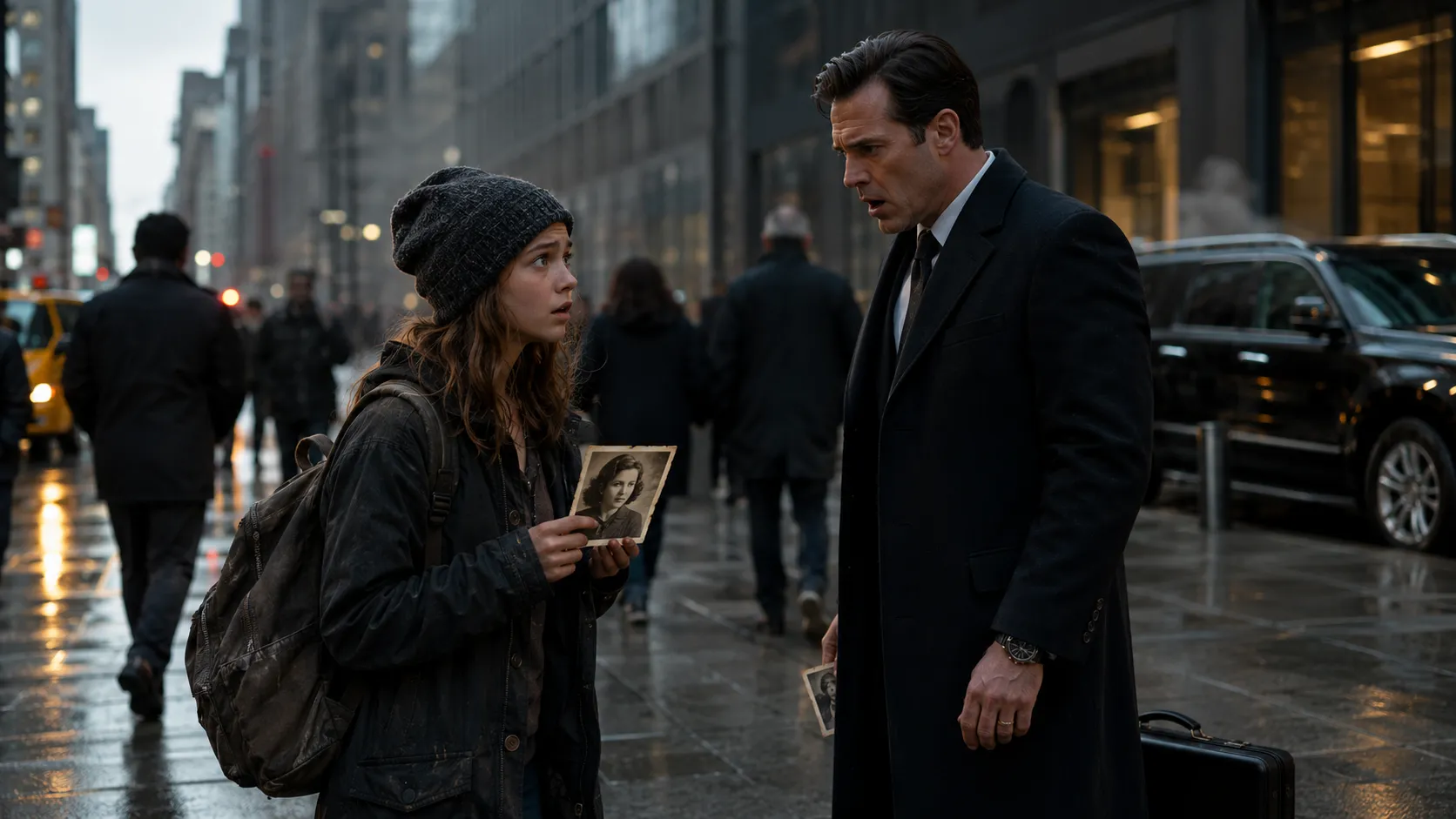
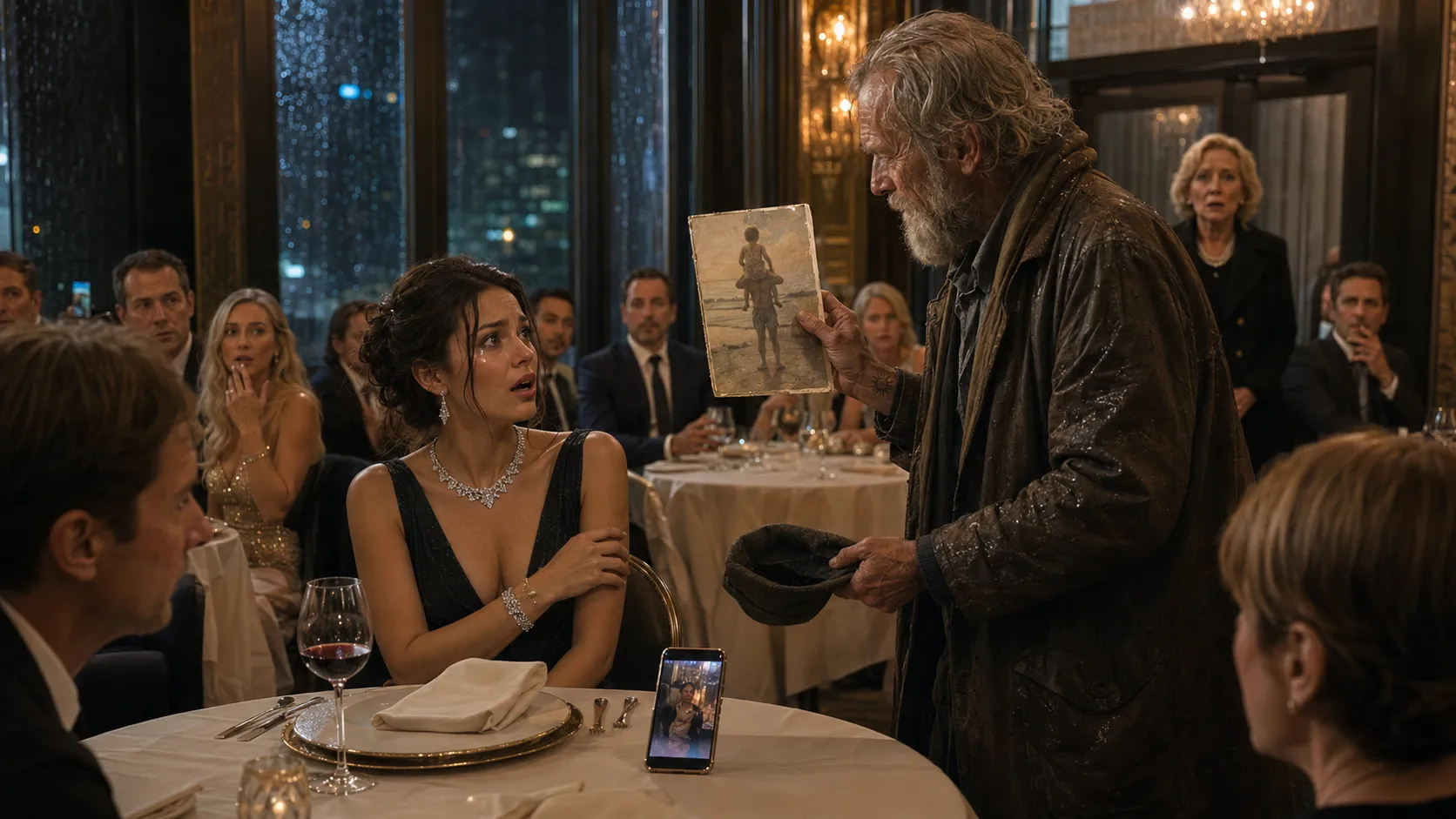
Vanessa Sinclair thought the old homeless man had walked into the restaurant to beg from people better than him. But when he pulled out a faded photograph and called her by the name only her father used, her entire perfect life began to collapse in front of everyone watching.
Nobody noticed the old man when he first stepped into Le Blanc Royale.
That was the problem with people like him in places like that.
They became invisible before anyone even learned their names.
Outside, rain hammered the glass windows of the Manhattan restaurant hard enough to blur the lights of passing taxis. Inside, chandeliers glowed over white tablecloths, polished silverware, crystal glasses, and people who spoke about money as if it were weather.
At the center table, surrounded by investors, brand managers, and two women filming everything for social media, sat Vanessa Sinclair.
Thirty-four years old.
Beautiful.
Famous.
Untouchable.
At least, that was what millions of followers believed.
Vanessa had built an empire from elegance. Luxury gowns. Designer handbags. Private jets. Charity galas where photographers captured her wiping away perfectly timed tears. Brands paid her more for one dinner appearance than most people earned in half a year.
That evening, she was livestreaming part of her meal.
“Success is about standards,” she told the camera, lifting her wineglass. “You have to protect the energy around you.”
Her guests nodded as if she had said something wise.
Then the front doors opened.
A gust of cold rain swept across the polished floor.
The hostess turned sharply.
Near the entrance stood an old man in a soaked brown coat.
His gray beard was uneven. His shoes were cracked and dark with water. One sleeve of his coat hung lower than the other, and his left hand trembled slightly as he removed a worn cap from his head.
He did not look drunk.
He did not look dangerous.
He looked exhausted.
The hostess moved toward him immediately, lowering her voice in the way polite people do when they are about to be cruel.
“Sir, you can’t come in here.”
The old man looked past her, scanning the room.
“I only need a glass of water,” he said.
Several diners turned away.
A few stared openly with disgust.
Vanessa noticed him then.
At first, her expression barely changed. Then irritation crossed her face, not because he had done anything to her, but because his presence disturbed the image she was creating.
The old man’s eyes found her table.
He froze.
It was such a small reaction that almost no one saw it.
Almost.
He took one step forward.
Then another.
The hostess tried to stop him, but he lifted one hand gently.
“Please,” he said. “Just a moment.”
Vanessa’s livestream camera was still pointed toward her.
She smiled, but the smile had gone hard.
“Is this part of the entertainment?” one of the investors muttered.
A few people laughed.
The old man stopped beside Vanessa’s table.
Up close, he looked even thinner. Rainwater dripped from the hem of his coat onto the polished floor.
“Excuse me,” he said softly. “Could I have a glass of water?”
Vanessa stared at him as if he had placed something filthy on her plate.
“You walked into a private restaurant looking like that?”
“I’m sorry,” he said. “I’ve been outside for a long time.”
“This isn’t a shelter.”
One of her friends gave a nervous little laugh.
The old man lowered his eyes.
“I know.”
Vanessa glanced at the livestream camera. Thousands of viewers were already commenting, reacting, waiting for the kind of sharp moment that made clips travel fast.
So Vanessa gave them one.
“This is exactly what’s wrong with this city,” she said loudly. “People think success means they can invade your space and demand things from you.”
The old man stood very still.
“I’m not demanding,” he said. “I asked.”
“Get him away from my table.”
The restaurant fell quieter.
Two security guards approached from near the bar. One took the old man by the arm. The other grabbed his shoulder more roughly than necessary.
The old man winced.
That was when something in his face changed.
Not anger.
Pain.
The kind of pain that had waited too many years and finally stopped being able to stay quiet.
He looked directly at Vanessa.
“You spent my daughter’s inheritance,” he said.
Everything stopped.
Even Vanessa’s smile disappeared.
“What did you say?”
The guard holding his shoulder loosened his grip.
The old man reached slowly into the inside pocket of his coat. The security guard tensed, but the old man only pulled out a folded plastic sleeve, worn at the edges and sealed with yellowing tape.
Inside was an old photograph.
His hand trembled as he held it up.
Vanessa looked at it reluctantly.
Then all the color drained from her face.
The photo showed a little girl on a beach, sitting on a man’s shoulders with her arms stretched wide. She had dark curls, sunburned cheeks, and a gap where one front tooth was missing.
The girl was laughing.
The man beneath her was laughing too.
On the back of the photo, written in faded blue ink, were three words:
Vivi and Dad.
Vanessa stopped breathing.
No one had called her Vivi in more than twenty years.
The old man’s voice broke.
“You used to call me Daddy.”
The phone Vanessa had been livestreaming from slipped from her hand and landed face-up on the table, still recording.
“No,” she whispered.
The old man’s eyes filled with tears.
“I searched for you for twenty-three years.”
Vanessa stood so quickly her chair scraped backward across the floor.
“This is some kind of sick joke.”
“I wish it were.”
“I don’t know you.”
But her voice cracked as she said it.
Because something inside her did know him.
Not clearly.
Not completely.
But in broken pieces.
A beach.
A carousel.
A deep voice singing softly in the dark.
Hands lifting her high above the waves.
Her mother’s voice cutting through the memory, telling her not to think about it.
The old man reached into his pocket again and removed a newspaper clipping, folded so many times the edges had begun to tear.
He placed it carefully on the table.
Vanessa did not want to touch it.
But she did.
The headline was old, blurred, and still readable.
LOCAL FATHER CONTINUES SEARCH FOR MISSING DAUGHTER AFTER CUSTODY DISPUTE
Beneath the headline was a photograph of the same man, younger then, standing outside a courthouse with a missing child poster in his hands.
The child on the poster was her.
Vanessa’s fingers tightened around the paper.
“No,” she whispered again, but this time it sounded less like denial and more like fear.
The old man spoke quietly.
“Your mother changed your last name after she took you. She moved you through five cities before you were twelve. She told everyone I was dangerous.”
Vanessa looked up sharply.
“She told me you abandoned us.”
“I know.”
“She said you hurt her.”
“I know that too.”
The old man swallowed.
“There was an investigation. The accusations were dismissed. She disappeared before the final custody hearing.”
Vanessa felt the restaurant closing in around her.
The faces.
The phones.
The whispers.
The livestream.
Her perfect life, her perfect brand, her polished identity — all of it suddenly felt like a dress stitched out of lies.
“You’re lying,” she said weakly.
The old man nodded once, as if he had expected nothing else.
Then he rolled up his sleeve.
On the inside of his wrist was a faded tattoo.
A small sun.
Simple.
Uneven.
Vanessa’s hand moved toward her own wrist before she could stop it.
Beneath her diamond bracelet, hidden under makeup and years of pretending it meant nothing, was the same tiny sun.
Her mother had told her they got matching tattoos when Vanessa was little.
Mother and daughter.
A private symbol.
But now another memory pushed through.
A beach town.
A laughing man holding her hand.
Her tiny voice saying, “Daddy gets one too.”
Vanessa gripped the edge of the table.
“Oh my God.”
The old man’s mouth trembled.
“Your name wasn’t Vanessa Sinclair then. It was Vivienne Hale.”
The name struck her somewhere so deep it felt physical.
Vivienne.
Vivi.
A name that had been buried beneath stylists, contracts, branding teams, and a mother who had told her never to look backward.
One of the security guards stepped away, suddenly ashamed.
The other let go of the old man completely.
Vanessa stared at him now, really stared.
Not at the coat.
Not at the shoes.
Not at the ruined beard or the shaking hands.
At the face beneath all of it.
There, behind the years, she saw something familiar.
Not from photographs.
From memory.
“You came to my college graduation,” she said suddenly.
The old man closed his eyes.
“Yes.”
Her breath caught.
“I saw you near the gate.”
“I know.”
“My mother said you were a reporter.”
“She saw me too.” His voice was quiet. “She told security I was harassing you.”
Vanessa covered her mouth.
The memory returned all at once.
A thin man standing beyond the crowd.
A bouquet of yellow flowers in his hand.
Her mother grabbing her elbow too tightly.
Don’t look at him.
He’s nobody.
The old man gave a sad smile.
“You looked happy that day. I didn’t want to frighten you.”
“So you just left?”
“I left the flowers at the gate.”
Vanessa’s knees weakened.
She remembered the flowers.
Her mother had thrown them into a trash can behind the car.
She had said they were from a stalker.
The restaurant was now completely silent.
Even people who had been filming seemed unsure whether to keep their phones raised.
The old man reached into his coat again, this time pulling out a small bundle tied with string. Dozens of photographs. Magazine covers. School photos. Newspaper clippings. Printed screenshots from interviews and red carpets.
Vanessa at nineteen.
Vanessa at twenty-five.
Vanessa at thirty.
Every stage of her life that he had been forced to watch from far away.
“I tried writing,” he said. “I tried calling. I tried lawyers until I had no money left. Your mother intercepted everything. After a while, every door closed before I reached it.”
Vanessa’s voice barely worked.
“How did you end up like this?”
He looked down at his coat.
“That’s a long story.”
“Tell me.”
He hesitated.
Then nodded.
“My name is Thomas Hale. I owned a small construction company in Queens. Nothing grand, but enough. Your mother handled the accounts because I trusted her. When she ran, she took most of what we had. Then came the court bills. Private investigators. Lawyers. Years of searching.”
His eyes lowered.
“I sold the house first. Then the company. Then the truck. Then my tools.”
Vanessa felt sick.
“And the inheritance?”
Thomas looked at her.
“My mother left money for you. A trust. It was supposed to be protected until you turned twenty-five. Your mother emptied it through forged documents and shell accounts. I tried to prove it, but by then she had changed both your names again.”
Vanessa sat down slowly.
The chair felt unsteady beneath her.
Everything around her looked unreal.
The chandeliers.
The wine.
The people.
The version of herself she had been performing ten minutes earlier.
“I built my whole life on money she stole from me,” Vanessa whispered.
Thomas shook his head.
“You built your life because you were talented.”
“No.” Her eyes filled. “I became someone who would throw you out for asking for water.”
That hurt him more than she expected.
He looked away.
Not because he hated her.
Because he did not.
And somehow that was worse.
A voice suddenly cut through the room.
“Do not listen to him.”
Everyone turned.
A woman stood near the entrance wearing a black coat, red lipstick, and an expression carved from ice.
Catherine Sinclair.
Vanessa’s mother.
For most of Vanessa’s life, Catherine had been a force of certainty. Elegant. Controlled. Impossible to embarrass. She spoke to assistants, bankers, lawyers, and even her own daughter as if the world existed to be managed.
But now there was panic beneath her composure.
“Mom,” Vanessa said.
Catherine walked toward the table without looking at Thomas.
“We are leaving.”
Vanessa did not move.
“Is he my father?”
Catherine’s jaw tightened.
“He is a manipulator.”
“That is not what I asked.”
“Vanessa.”
“Is he my father?”
The room waited.
For once, Catherine did not have an answer ready.
Thomas laughed softly, but there was no joy in it.
“Still lying after all these years.”
Catherine snapped toward him.
“You lost the right to speak to her.”
“I never lost that right. You stole it.”
“I protected my daughter.”
“From what?” Vanessa asked.
Catherine turned back to her.
“From him.”
“Why did we move so much?”
Catherine’s eyes flickered.
“Because he kept finding us.”
The restaurant went still.
Vanessa stared at her mother.
The words had come too quickly.
Too honestly.
Catherine realized it a second too late.
Vanessa stood.
“So he didn’t abandon us.”
“Vanessa, listen to me.”
“You ran.”
Catherine’s voice hardened.
“He would have taken you away from me.”
“If the court was going to give him custody, maybe there was a reason.”
Catherine’s face changed.
For the first time in Vanessa’s life, her mother looked not powerful, but exposed.
“You were my daughter,” Catherine said.
“I was his daughter too.”
Thomas looked down.
The sentence seemed to undo him more than anything else that had happened.
Catherine stepped closer to Vanessa and lowered her voice.
“We can fix this privately. Give me your phone. End the stream.”
Vanessa looked at the phone still lying on the table.
Comments were moving across the screen too fast to read.
Thousands of people were still watching.
Her humiliation was no longer contained.
But neither was the truth.
She picked up the phone.
For a moment, everyone thought she would turn it off.
Instead, Vanessa held it toward her mother.
“Tell them,” she said.
Catherine’s eyes widened.
“What?”
“Tell them what you did.”
Catherine’s face hardened again.
“You are emotional.”
“No. I am awake.”
Catherine reached for the phone, but Vanessa stepped back.
“Did you take the trust money?”
Catherine said nothing.
“Did you tell me he abandoned us?”
“Lower your voice.”
“Did you lie about him?”
Catherine’s expression cracked.
“You were a child. I did what I had to do.”
Thomas closed his eyes.
Vanessa let out a sound that was almost a sob.
“That’s not an answer.”
Catherine looked around at the guests, the cameras, the phones, the entire restaurant now witnessing the destruction of the story she had spent twenty-three years controlling.
Then she said the only thing she could still say.
“You owe your life to me.”
Vanessa’s tears spilled over.
“No,” she whispered. “I owe my life to both of you. But you made me hate one of the people who loved me most.”
For the first time, Catherine seemed to have no weapon left.
Thomas picked up his cap slowly.
“I didn’t come to hurt anyone,” he said.
Vanessa turned toward him.
“Why did you come tonight?”
He looked ashamed then.
Not for who he was.
For what he had come to say.
“I saw your livestream announcement. I knew you would be here.” His hand trembled around the cap. “I wanted to see you once more.”
“Once more?”
He gave her a weak smile.
“Stage four lung cancer.”
The words did not land loudly.
They landed deeply.
Vanessa’s face went blank.
“No.”
“I’m tired, Vivi.”
Hearing the old name broke something open inside her.
“No,” she said again, this time like a child.
Thomas smiled sadly.
“I had a speech prepared. I thought I would tell you everything calmly. But when you looked at me like I was nothing…” His voice cracked. “I suppose I lost what little courage I had.”
Vanessa stepped toward him.
Catherine grabbed her arm.
“Don’t.”
Vanessa pulled free.
The movement was small.
But it was the first time in her adult life she had truly stepped away from her mother.
She walked to Thomas.
Up close, he smelled of rain, cold air, and cheap soap. His hands were rough. His face was older than it should have been. His eyes were tired beyond words.
She did not know how to fix twenty-three years.
She did not know how to apologize for cruelty she had committed before she understood the wound beneath it.
So she asked the only question that mattered.
“Did you really sing to me?”
Thomas nodded.
“Every night.”
“What song?”
He looked at her for a long moment.
Then softly, barely above the rain outside, he began to hum.
The melody moved through the restaurant like a ghost.
Vanessa knew it instantly.
Not as a song she remembered learning.
As something older than memory.
Her mother had hummed it sometimes when Vanessa was sick, but only the beginning. The rest had always felt missing, like a locked door at the end of a hallway.
Thomas knew the whole melody.
Every turn.
Every pause.
Vanessa covered her mouth.
Then she stepped into his arms.
For one terrible second, Thomas did not move, as if he did not believe the moment was real.
Then he dropped the cap and held her.
Not tightly.
Carefully.
Like a father afraid that if he held on too hard, the child he had lost might vanish again.
The restaurant remained silent.
Somewhere behind them, Catherine whispered Vanessa’s name.
Vanessa did not turn around.
The livestream captured everything.
By midnight, the clip had spread across the country.
At first, people mocked Vanessa. They replayed the moment she insulted the homeless man. They called her cruel, fake, heartless. Brands began calling her manager before the sun came up.
But by morning, the second part of the video had spread too.
The photograph.
The tattoo.
The newspaper clipping.
The mother’s confession.
The lullaby.
And slowly, the story changed.
Not completely.
Public opinion never moves with mercy all at once.
But enough people began asking the question that mattered:
What kind of mother teaches a daughter to hate her father for twenty-three years?
Vanessa did not post for three days.
For a woman whose entire life depended on being seen, her silence became louder than anything she had ever said.
On the fourth day, she uploaded a video.
No makeup.
No designer lighting.
No perfect background.
Just Vanessa sitting beside a hospital bed where Thomas Hale slept beneath a thin blanket, an IV in his arm and a wool cap pulled over his head.
Her voice was steady, but her eyes were swollen.
“I spent my life believing a story that was handed to me before I was old enough to question it,” she said. “That does not excuse how I treated my father. It only explains how I became someone who could.”
She looked toward him.
“His name is Thomas Hale. He is not a beggar. He is not a stranger. He is my father.”
The video was viewed sixty million times in two days.
But Vanessa did not care about the number.
Not anymore.
The weeks that followed were not easy.
Reunion stories look clean when strangers tell them.
Real reunions are messier.
Thomas needed treatment. Vanessa arranged the best doctors she could find, but money could not rewrite time. Some days he was strong enough to walk in the hospital garden. Other days he could not lift a spoon without help.
Vanessa visited every day.
At first, they spoke like strangers standing on opposite shores.
He told her about the small house in Queens where she had taken her first steps. About the dog she named Pancake. About the night she fell asleep holding a plastic yellow shovel after building sandcastles for six straight hours.
Vanessa told him about boarding schools, photo shoots, loneliness wrapped in luxury, and a mother who made love feel like obedience.
Sometimes she cried.
Sometimes he did.
Sometimes they sat in silence because twenty-three years could not be filled by conversation alone.
Catherine Sinclair did not disappear quietly.
She hired attorneys.
She released statements.
She claimed Thomas had manipulated Vanessa during a “vulnerable public moment.”
Then court documents began surfacing.
Old custody files.
Dismissed accusations.
Bank transfers.
Name changes.
Trust withdrawals.
Letters Thomas had sent and Catherine had hidden.
The truth did not arrive as one dramatic confession.
It arrived in paperwork.
Page after page.
Lie after lie.
One afternoon, Vanessa visited her mother in the apartment where she had grown up surrounded by white furniture, locked drawers, and rules about which memories were allowed.
Catherine was waiting in the living room.
“You’re destroying the family,” she said.
Vanessa stood near the doorway.
“No. I’m finding out there was one before you broke it.”
Catherine’s eyes narrowed.
“He will die soon. And when he does, you will come back to me.”
Vanessa felt the old fear move inside her.
The little-girl fear.
The fear that love could be withdrawn like money from an account.
Then she looked at the woman who had controlled the story for most of her life.
“No,” Vanessa said quietly. “When he dies, I will still be his daughter.”
Catherine said nothing.
There was nothing left to control.
Six months later, Thomas Hale walked into Le Blanc Royale again.
This time, he wore a clean navy coat, polished shoes, and a scarf Vanessa had bought him because he still refused to admit when he was cold.
He was thinner.
Weaker.
But he was not alone.
Vanessa held his arm as they entered.
The same hostess who had tried to turn him away stood by the podium, pale with embarrassment.
“Mr. Hale,” she said softly. “Welcome.”
Thomas smiled kindly.
“Thank you.”
They were seated by the window, not hidden in a corner. Rain tapped against the glass again, gentler this time. The chandeliers still glowed. The silverware still shone.
But Vanessa saw the room differently now.
Not as proof that she belonged above people.
As a place where she had nearly lost the only man who had never stopped looking for her.
Thomas looked around.
“This is quite a place.”
Vanessa smiled faintly.
“You hated it the first time.”
“I was wet, hungry, and being thrown out.”
“That’s fair.”
He chuckled, then coughed into a napkin.
Vanessa’s face tightened.
“I’m alright,” he said.
“You always say that.”
“Fathers are allowed.”
She reached across the table and took his hand.
“I’m sorry,” she said.
“You’ve said that enough.”
“Not for that night. For all of it.”
Thomas shook his head.
“You were a child.”
“I wasn’t a child when I called you filthy.”
“No,” he said gently. “But you were still lost.”
Vanessa looked down.
Thomas squeezed her hand.
“I didn’t survive all those years to get revenge on you, Vivi.”
She looked up.
“I thought the story was called that.”
He smiled.
“Revenge is what people wanted it to be. But the truth is better.”
“What truth?”
“That your mother could steal twenty-three years.” His eyes softened. “But not all of them.”
Vanessa began to cry quietly.
He reached across the table and wiped one tear from her cheek with his thumb the way he had done when she was little.
Outside, rain softened the city lights.
Inside, the restaurant continued around them.
But Vanessa no longer cared who watched.
For the first time in her life, she was not performing grief, success, elegance, or strength.
She was simply a daughter sitting with her father.
And that was enough.
Thomas died nine months later on a Sunday morning, with Vanessa beside him and the old beach photograph resting on the table near his bed.
At his funeral, there were no celebrities.
No red carpet.
No brand photographers.
Only a small group of people whose lives had been touched by the story after it went public: parents searching for children, adults separated from family by lies, and strangers who wrote letters saying Thomas had made them call someone they had been too proud to forgive.
Vanessa spoke last.
She stood before the small chapel holding the photograph in both hands.
“My father found me in the most public, humiliating way possible,” she said. “For a long time, I thought that was the punishment I deserved. But now I understand something. He did not come to punish me. He came before time ran out.”
Her voice broke.
“I was ashamed of him before I knew him. He loved me before I remembered him. And for the rest of my life, I will live with both truths.”
After the funeral, Vanessa disappeared from the internet for nearly a year.
When she returned, her account looked different.
Less luxury.
More people.
She started a foundation to help parents and children separated by false accusations, hidden documents, and family manipulation. She sold half her designer collection to fund the first year herself.
The tabloids called it redemption.
Vanessa never used that word.
Some things cannot be redeemed publicly.
Only lived differently.
Every year, on the anniversary of that night at Le Blanc Royale, Vanessa returned to the same beach from the photograph. She would sit in the sand with the old picture in her lap and listen to the waves.
Sometimes she hummed the lullaby.
Not perfectly.
Never as beautifully as he had.
But she remembered it now.
Every note.
And when the wind moved across the water, she liked to imagine that somewhere beyond the noise of the world, her father could hear her.
Not as Vanessa Sinclair.
Not as the influencer.
Not as the woman in the livestream.
But as Vivi.
His little girl.
Found at last.