Most people only saw an old man selling hot dogs from a rusted cart on the corner. They never noticed he had been quietly watching the lonely widow across the street… or that one freezing night, he would become the only reason she survived.
After Harold Bennett lost his wife, people slowly stopped noticing him.
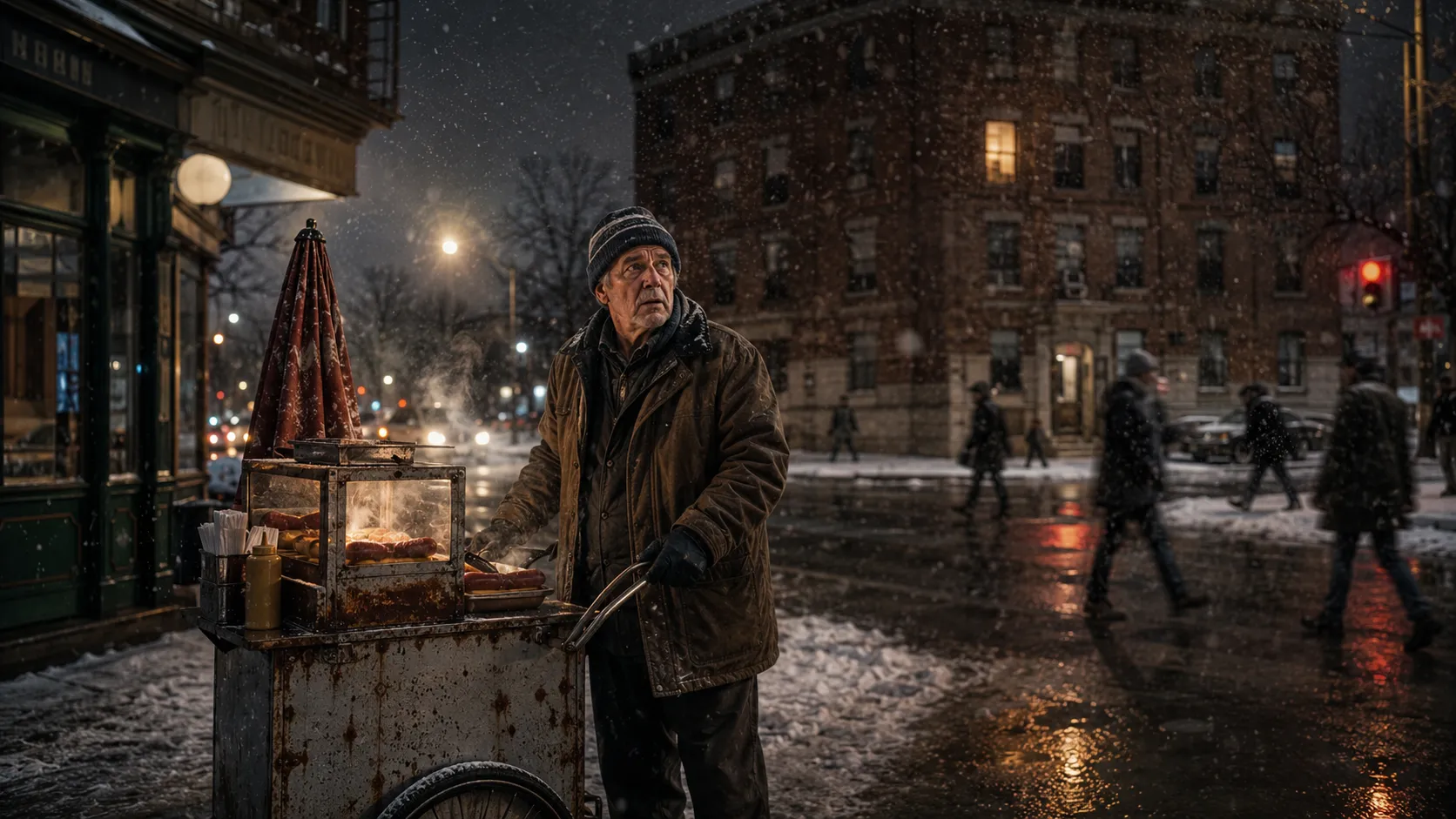
At seventy-two, he spent most mornings behind a small hot dog stand near the corner of Maple and 3rd, just outside an old pharmacy and across from a row of aging apartment buildings. The cart was old, slightly rusted, and carried the smell of grilled onions that lingered in the air long after lunchtime.
Most customers barely looked at him.
Teenagers joked about the “sad little hot dog man.” Office workers grabbed food while staring at their phones. Some days Harold made less than twenty dollars before sunset.
But Harold still showed up every morning at exactly nine o’clock.
Routine was easier than grief.
Before his wife Eleanor died, they had spent forty-three years together. She used to stand beside the cart during busy afternoons handing out napkins and smiling at strangers as if the world still had plenty of goodness left in it.
After cancer took her, the silence in Harold’s apartment became unbearable.
So he kept working.
Not for money.
For somewhere to be.
Across the street from Harold’s stand lived a woman named Margaret Doyle.
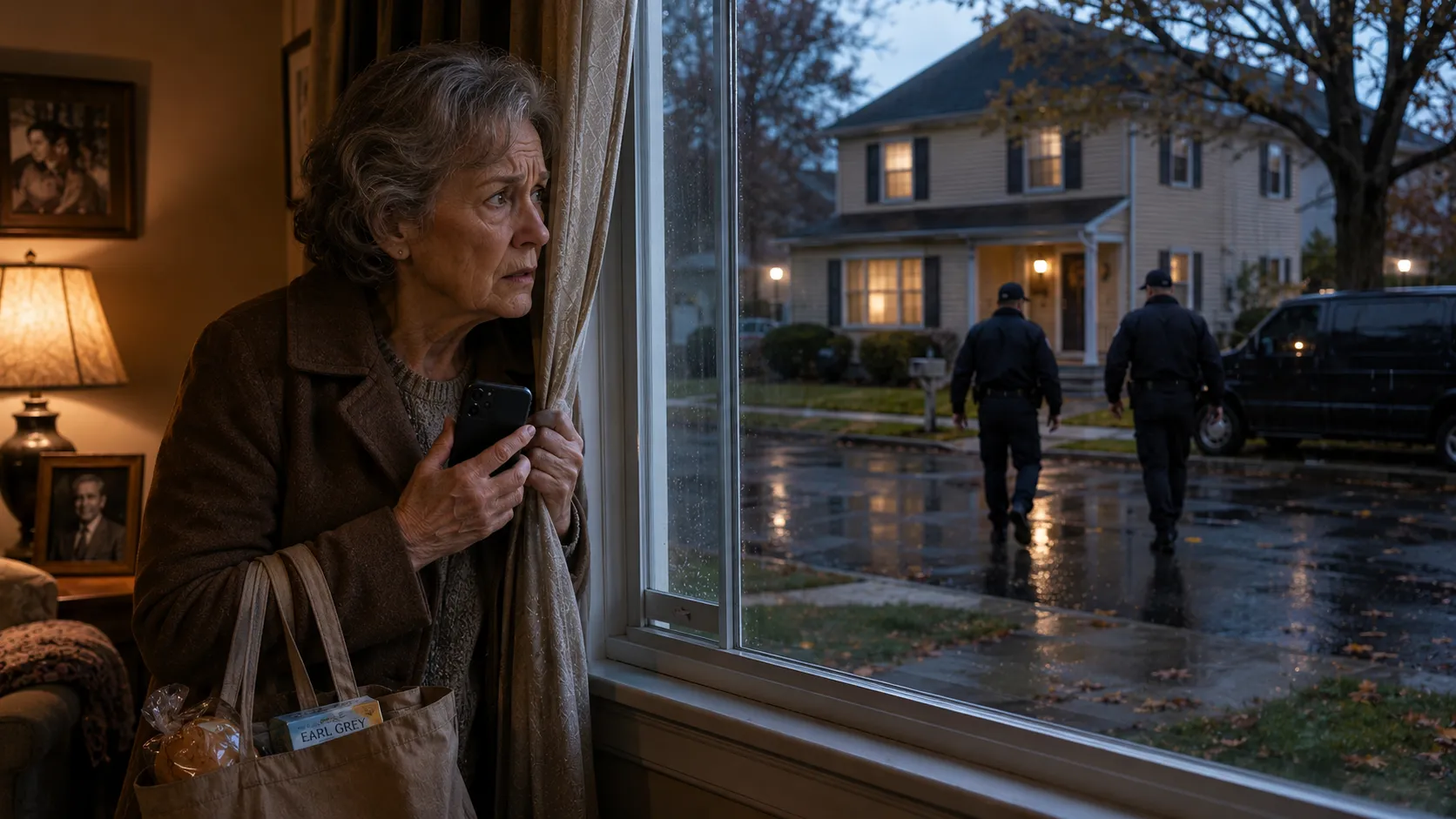
Margaret was sixty-eight, widowed too, and painfully private. She lived alone on the fourth floor of the brick apartment building overlooking the intersection. Every morning around ten-thirty, she walked slowly to the pharmacy with a canvas grocery bag hanging from one arm.
And every morning, Harold watched to make sure she crossed the street safely.
At first, Margaret barely acknowledged him. She gave polite nods at most. But over time, small habits formed between them.
Harold would lift a hand when she passed.
Margaret would stop for exactly three minutes every Friday afternoon and buy a hot dog she never quite finished eating.
Neither of them talked much.
Lonely people often understand each other without needing many words.
Winter arrived early that year.
By December, icy wind swept through the streets hard enough to sting exposed skin. Business became slower than ever. Some afternoons Harold stood alone for hours beside his steaming cart while snow collected along the sidewalks.
One Thursday evening, just before sunset, Margaret stopped at the stand wearing a heavy gray coat and knitted gloves.
“You should go home early tonight,” she said quietly. “Storm’s getting worse.”
Harold smiled faintly.
“So should you.”
She gave a small shrug.
“Not much waiting for me there.”
For some reason, that sentence stayed with him long after she disappeared back across the street.
Not much waiting for me there.
Around eight-thirty that night, Harold finally began packing up the stand. Snow was falling heavily now, turning the roads white beneath the streetlights.
As he locked the cart, he glanced automatically toward Margaret’s apartment building.
That was when he noticed something strange.
The light in her kitchen was still on.
Normally by that hour, the apartment windows were dark.
Harold paused.
Maybe she had forgotten.
Maybe she was reading.
Maybe it was none of his business.
He started walking away.
Then stopped.
Something deep in his chest twisted with unease.
He looked back at the glowing window one more time.
Without fully understanding why, Harold crossed the street.
Inside the apartment building lobby, the elevator was broken again. Harold climbed the stairs slowly, gripping the rail as his knees protested with every floor.
By the time he reached the fourth floor, he was breathing hard.
He knocked once.
No answer.
He knocked harder.
Still nothing.
Then he heard it.
A faint sound from inside.
Not a voice.
A weak scraping noise against the floor.
“Margaret?” he called.
Silence.
Harold felt cold fear spread through him.
He grabbed the doorknob.
Unlocked.
The apartment was dark except for the kitchen light.
Margaret lay collapsed beside the hallway table, one hand weakly moving against the hardwood floor.
“Dear God,” Harold whispered.
He rushed toward her as fast as his aging legs allowed.
Margaret’s face was pale and damp with sweat. One side of her mouth drooped slightly. Her breathing came in shallow, uneven bursts.
Harold had seen enough medical emergencies in life to understand immediately.
Stroke.
He grabbed the phone from the wall and called emergency services with trembling hands.
Then he knelt beside her for nearly eleven minutes until the ambulance arrived.
Margaret drifted in and out of consciousness the entire time. Once, her eyes opened just enough to find his face.
“You came back,” she whispered weakly.
Harold squeezed her hand carefully.
“Of course I did.”
The paramedics later told him something that made his stomach turn cold.
Another hour alone and Margaret likely would not have survived.
At the hospital, Harold sat in the waiting room until almost three in the morning wearing the same snow-covered coat and smelling faintly of mustard and grilled onions.
Nobody asked him to stay.
He simply could not leave.
Two days later, Margaret finally woke fully in recovery.
Her speech was slower, but clear enough.
The first thing she asked the nurse was whether “the hot dog man” was still there.
Harold visited every afternoon after that.
At first they talked about ordinary things — weather, hospital food, broken elevators, the terrible coffee downstairs. But grief has a strange way of recognizing itself.
Eventually the real conversations began.
Margaret admitted that after her husband died, some days she purposely stayed silent for hours just to see what it felt like to disappear.
Harold confessed he still set two plates on the table by accident sometimes.
Neither laughed at the other.
They understood too well.
By early spring, Margaret returned home with a cane and strict instructions from doctors to avoid being alone too much.
Harold began bringing her dinner twice a week.
Then three times.
Soon, the neighbors started noticing something unusual.
The old widow who once kept her curtains closed now opened her windows during the afternoons. The old hot dog vendor who barely spoke to anyone suddenly smiled more often.
One warm April morning, a teenage customer approached Harold’s stand and casually asked why he always closed early on Thursdays now.
Harold looked across the street where Margaret sat near her window reading a book in the sunlight.
Then he smiled quietly.
“Because somebody’s waiting for me at home.”