Every evening, the homeless man outside the subway station warned me about the same thing: “Don’t go home tomorrow.” I thought he was confused… until I opened my front door the next morning and found my entire life shattered.
For almost three months, I passed the same homeless man every evening on my way home from work.
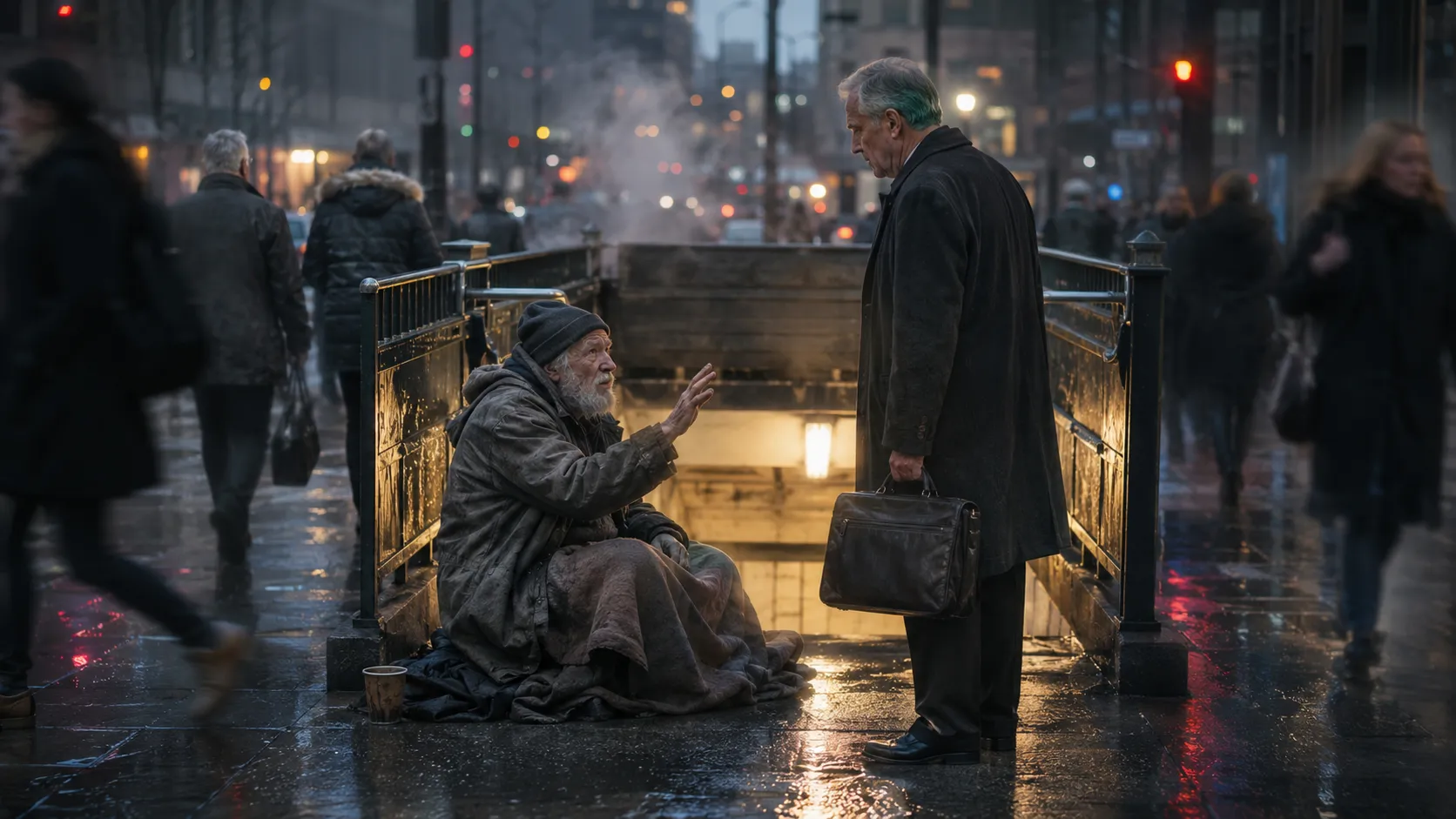
He sat near the entrance of the downtown subway station wrapped in a torn gray coat, no matter the weather. Most people ignored him. Some crossed the street to avoid him altogether. Others dropped spare coins into the old coffee cup beside him without ever making eye contact.
I usually did the same.
Not because I hated him. Life had simply trained me to look away from things that felt too heavy to carry home.
At fifty-six, my days had become painfully predictable. I worked at a small insurance office, answered calls from angry clients, microwaved frozen dinners at night, and pretended not to notice how quiet my apartment had become since my divorce three years earlier.
My daughter Emily still called sometimes, but less than before.
People say loneliness arrives suddenly.
It does not.
It arrives one small silence at a time.
The homeless man rarely spoke. Most nights he only nodded as I passed. But one Thursday evening in November, he suddenly lifted his head as I walked by.
“Don’t go home tomorrow,” he said quietly.
I slowed for a moment, thinking I had misheard him.
“What?”
His tired eyes locked onto mine.
“Tomorrow,” he repeated. “Don’t go home after work.”
I gave an uncomfortable laugh.
“Alright,” I said politely, already walking away.
I assumed he was confused or mentally ill.
The next evening, he was waiting for me again.
The moment he saw me approaching, he stood up so quickly his blanket slipped from his shoulders.
“You have to listen this time,” he said. “Please. Don’t go home tomorrow.”
Something about his voice unsettled me.
Not the words.
The fear.
It was real fear.
I stared at him for a few seconds before shaking my head.
“I think you’ve mistaken me for someone else.”
“No,” he whispered. “I haven’t.”
I hurried away before he could say anything else.
That night I barely slept.
His words kept replaying in my head.
Don’t go home tomorrow.
At work the next day, I told myself I was being ridiculous. By lunchtime I had almost forgotten the whole thing.
But around four o’clock, my chest started feeling strangely tight. I kept checking the clock. Every excuse to stay late suddenly sounded reasonable.
When five-thirty arrived, I found myself standing outside the office building, frozen.
Go home.
Don’t go home.
I felt embarrassed even thinking about it.
And yet…
Instead of taking the subway home immediately, I wandered into a small diner two blocks away and ordered coffee I didn’t even want.
I stayed there nearly two hours.
By the time I finally reached my apartment building, it was close to eight-thirty.
At first everything looked normal.
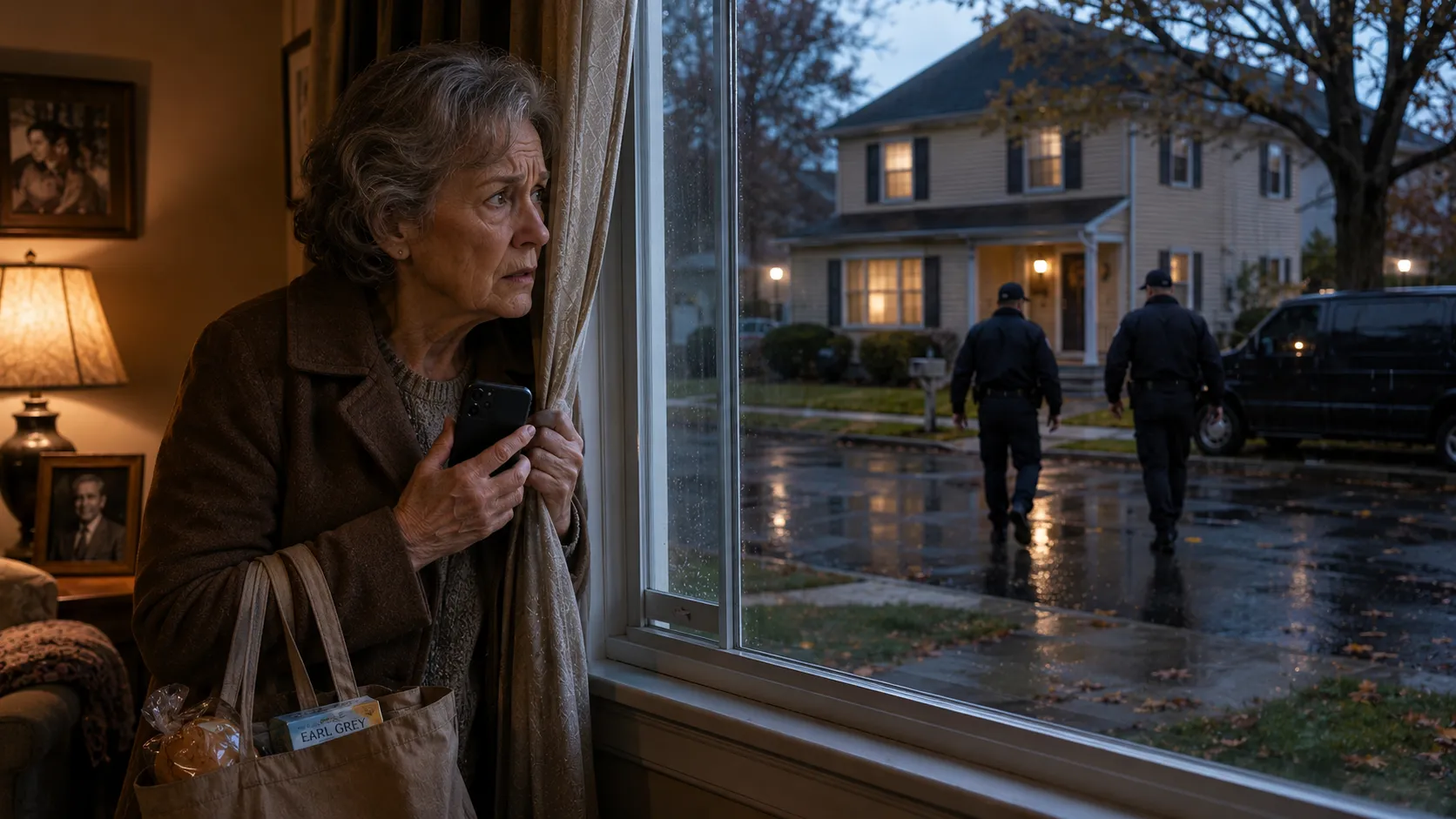
Then I noticed the police cars.
My stomach dropped instantly.
The front entrance doors were open. Neighbors stood outside in robes and winter coats whispering to one another. Red and blue lights flashed across the walls.
I pushed through the crowd.
One of the officers stopped me.
“Sir, you can’t go in there.”
“I live here,” I said.
The officer’s expression changed immediately.
“What apartment?”
“4B.”
For one terrible second, nobody spoke.
Then another officer appeared beside him.
“There’s been a break-in,” he said carefully.
I felt all the blood drain from my face.
My apartment door had been kicked open.
Furniture overturned.
Drawers ripped apart.
Glass everywhere.
But that was not the worst part.
The detective told me whoever broke in had arrived around six-fifteen.
If I had gone home at my usual time…
I would have walked in while they were still inside.
One of the officers quietly admitted the intruders had been armed.
I stood there staring at my destroyed living room while the homeless man’s voice echoed inside my head.
Don’t go home tomorrow.
The next morning, I went straight back to the subway station.
He was there, sitting under the same flickering light.
The moment he saw me, his shoulders relaxed slightly, as if he had been waiting all night.
“You’re alive,” he said softly.
I walked toward him slowly.
“How did you know?”
He looked down at his hands for a long time before answering.
“Because I heard them talking.”
I said nothing.
“There were two men behind the station two nights ago,” he explained. “They mentioned your building. Your floor. Your routine.” He swallowed hard. “I tried to tell the police, but nobody listened to me.”
“Why didn’t you tell me everything?”
A sad smile crossed his face.
“Would you have believed me?”
I opened my mouth.
Then closed it again.
Because he was right.
I wouldn’t have.
For a long moment, traffic roared behind us while people hurried past pretending not to see either of us.
Then I noticed how badly his hands were shaking from the cold.
“When was the last time you ate?” I asked quietly.
He shrugged.
“Yesterday morning, I think.”
I looked at the man differently then.
Not as a homeless stranger.
Not as part of the background.
But as the reason I was still standing there breathing.
“What’s your name?” I asked.
“Walter.”
I nodded slowly.
“Well, Walter,” I said, “you’re having breakfast with me today.”
His eyes filled with tears almost instantly, though he tried hard to hide them.
Over breakfast, I learned things most people never would have bothered asking.
Walter had once worked construction for nearly thirty years. After his wife died, he lost his home little by little—first the bills, then the drinking, then the job, then everything else.
“What keeps you going?” I asked him at one point.
Walter stared down into his coffee.
“Somebody once helped me when they didn’t have to,” he said quietly. “Figured maybe I should do the same before I die.”
I drove home later that afternoon with those words stuck in my chest.
That evening, for the first time in years, my apartment no longer felt empty.
Broken, yes.
But not empty.
Because sometimes the people we overlook the fastest are the ones carrying the warning that saves our lives.
And sometimes kindness returns from places we would never think to search.