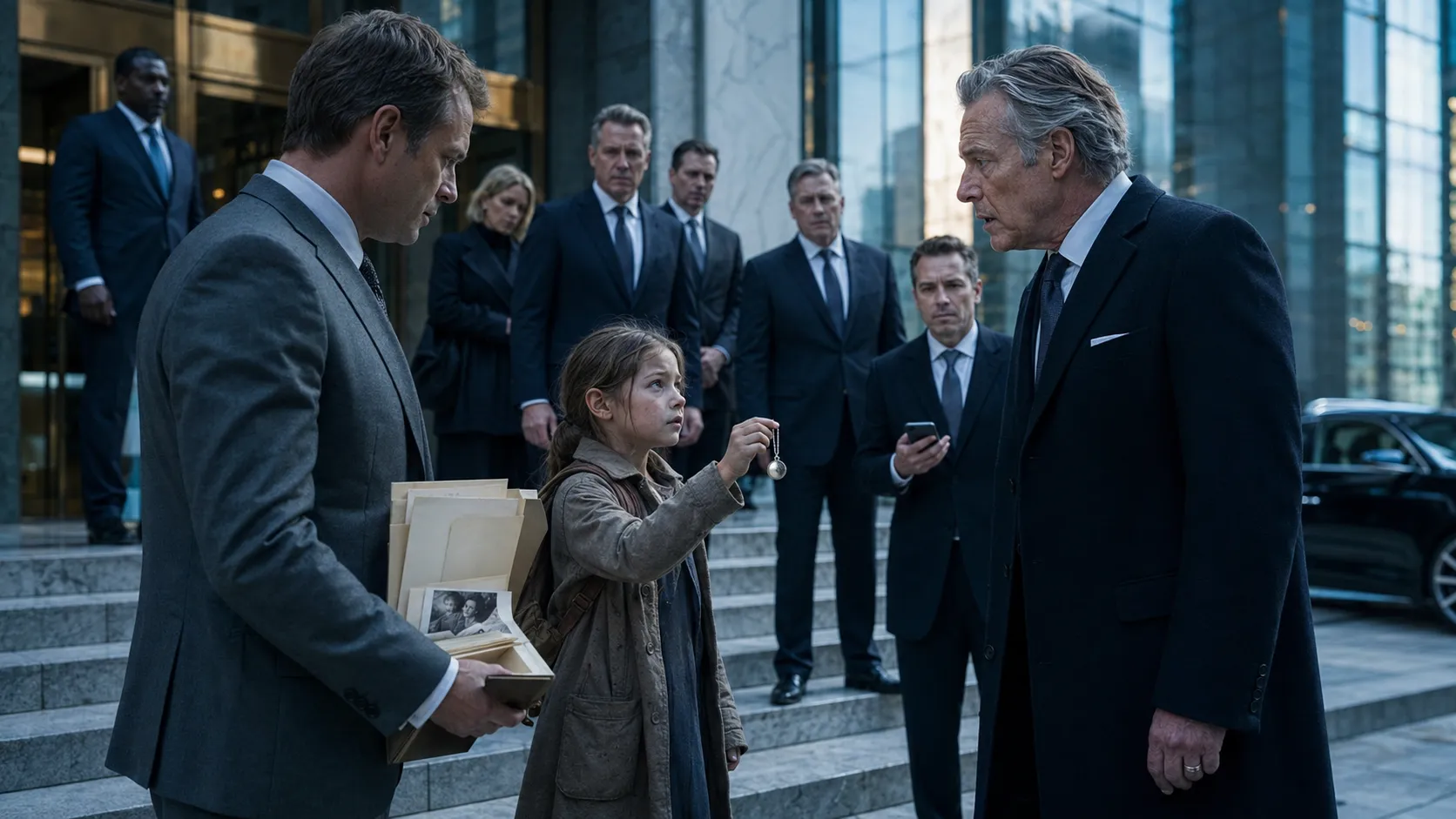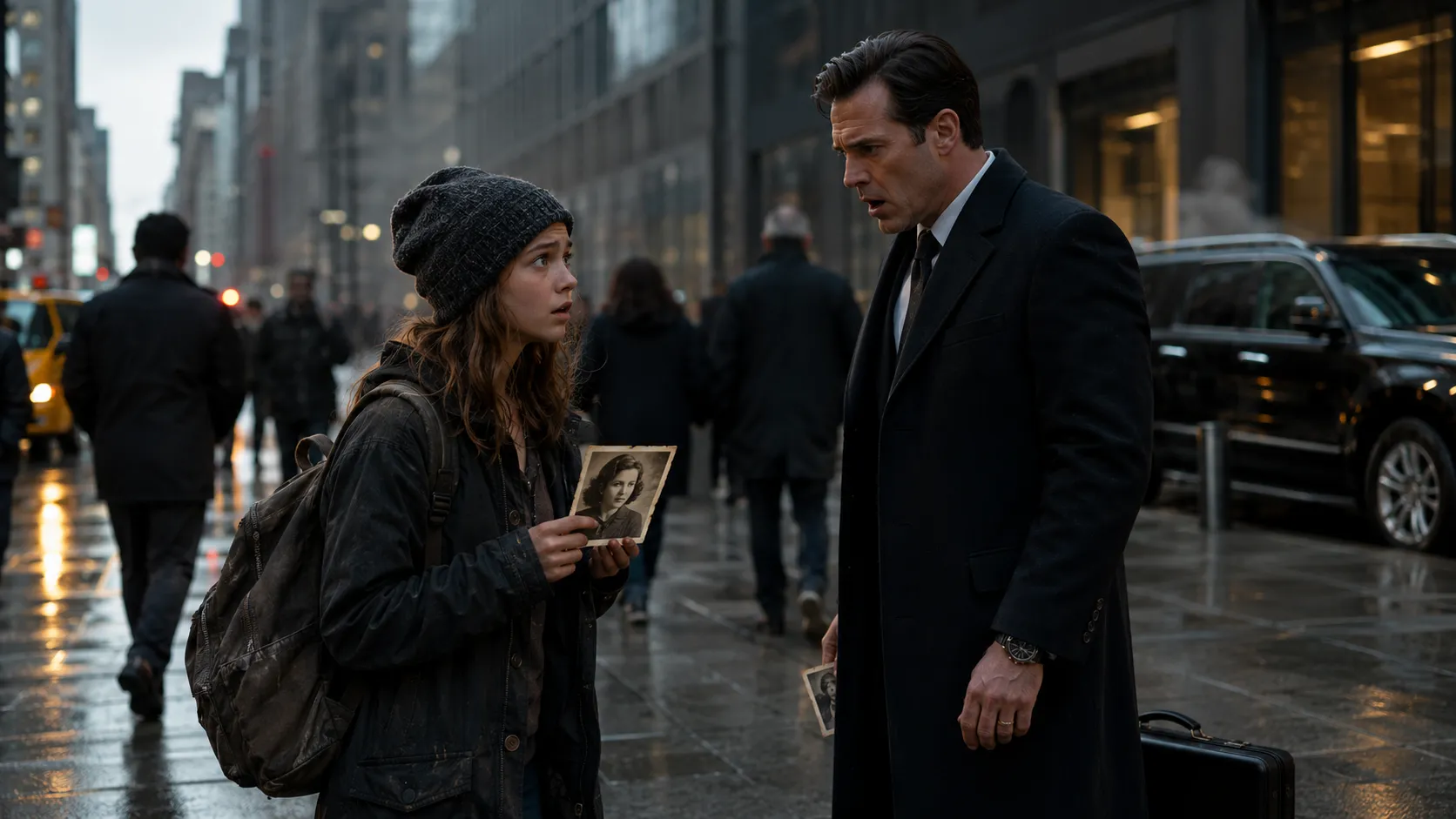
Everyone at Blackstone Juvenile Facility thought twelve-year-old Ethan Cole was a monster. But when the lights went out, the strongest inmate vanished, and three words appeared on the warden’s desk — “She is hungry” — one detective realized the boy wasn’t the danger. He was the last witness.
The cafeteria inside Blackstone Juvenile Correctional Facility was loud enough to shake the walls.
Metal trays slammed onto tables. Boys shouted across the room. Guards stood near the exits with tired eyes, pretending not to hear the insults, the threats, the quiet deals made under tables. The smell of overcooked beans, bleach, wet concrete, and fear hung beneath the buzzing fluorescent lights.
Every inmate wore the same orange jumpsuit.
Every inmate learned quickly where to sit, whom to avoid, and which guards would help only after it was too late.
Except one boy seemed not to learn at all.
He sat alone at the far corner table.
Small.
Pale.
Silent.
His prison tag read:
ETHAN COLE — CELL BLOCK C
He was twelve years old, though he looked younger when he lowered his head. His wrists were too thin for the cuffs they used when moving him between units. His dark hair fell over his eyes. He ate slowly, carefully, never reaching for anyone else’s food, never speaking unless spoken to first.
That alone made him dangerous in a place like Blackstone.
Silence invited stories.
And stories moved fast through locked buildings.
Some said Ethan had stabbed his foster father in his sleep.
Others said he set fire to a house while the family was still inside.
One boy swore he had seen Ethan smile while another inmate screamed in the infirmary.
Nobody knew the truth.
But everyone stayed away.
Everyone except Marcus Kane.
Marcus was sixteen, six-foot-three, broad, tattooed with homemade ink across both arms, and old enough in the eyes to look less like a teenager than a man who had already decided remorse was for weaker people. Even some guards gave him space. He controlled half of Cell Block B through intimidation, favors, and violence that was carefully timed between camera sweeps.
Marcus hated weakness.
And he hated anything that made other people afraid before he did.
The first time he noticed Ethan sitting alone every day, something in him became offended.
Not curious.
Offended.
A small boy should not make a room quieter.
So Marcus picked up his tray and walked across the cafeteria with two boys behind him laughing before anything had happened.
The noise began to fade.
Boys turned.
Guards looked over, then looked away.
Everyone sensed trouble.
Ethan kept eating.
Marcus stopped beside his table.
No reaction.
That annoyed him instantly.
“Well,” Marcus said loudly, “look what we got here.”
Ethan lifted one spoonful of beans and chewed slowly.
Marcus’s friends laughed.
“A baby prisoner,” Marcus said.
More laughter.
Ethan did not look up.
Marcus leaned closer.
“You deaf, kid?”
No answer.
A guard near the wall shifted his weight but did not move.
Marcus smiled. He liked this part. The part before the lesson. The part where the room waited for him to prove who owned it.
Without warning, he slammed both hands on Ethan’s table.
The milk carton tipped. White milk spread across the metal surface and ran into Ethan’s tray.
A few boys flinched.
Ethan finally stopped eating.
Marcus grinned.
“There he is.”
Ethan looked at the spilled milk.
Then at Marcus.
His eyes were not angry.
That was the first thing Marcus did not like.
Angry boys were easy. Afraid boys were easier. Ethan’s eyes were calm, dark, and old in a way that made Marcus feel, for half a second, as if he had knocked on the wrong door.
Then Ethan spoke.
“Are you done?”
The cafeteria went silent.
Marcus blinked.
Then laughed.
“You hear this little psycho?”
His friends laughed too, but less confidently now.
Marcus leaned down until his face was inches from Ethan’s.
“Yeah,” he growled. “I’m done. Now what?”
Ethan stared at him.
For several seconds, nothing happened.
Then the lights went out.
Total darkness swallowed the cafeteria.
Screams erupted immediately.
Trays crashed to the floor. Chairs scraped backward. Boys cursed and shoved one another beneath tables. A guard yelled for backup. Somewhere, glass shattered.
Then came a sound nobody forgot afterward.
Not a gunshot.
Not a scream.
A heavy, violent crash, like a table being thrown against concrete.
Marcus shouted once.
Then his voice cut off.
The emergency red lights flickered on.
Everyone froze.
Marcus Kane was on the floor beside Ethan’s table.
His body was twisted against a broken bench. Blood ran from his nose. His eyes were wide open, not with pain alone, but with pure terror.
Ethan sat calmly in his chair.
Breathing normally.
Hands folded in his lap.
His tray was gone.
His milk still dripped from the table edge.
For a moment, nobody moved.
Then the guards rushed in.
“Inmate down!”
“Lock the cafeteria!”
“Get Cole!”
Two officers grabbed Ethan roughly by the arms.
The boy did not resist.
As they dragged him toward the exit, he looked once at Marcus trembling on the floor.
Then he said softly, almost sadly:
“I warned him.”
That sentence traveled through Blackstone before dinner was over.
By morning, Ethan Cole was no longer just strange.
He was something else.
The boy from Cell Block C.
The one nobody touched.
Marcus survived, though he refused to explain what happened during the blackout. When the doctor asked who attacked him, Marcus stared at the wall and shook so badly the nurse had to sedate him.
“I didn’t see him,” Marcus whispered once.
“Who?”
Marcus’s lips trembled.
“Her.”
After that, he stopped speaking.
Three days later, Blackstone changed completely.
Boys crossed hallways to avoid Ethan’s cell. Guards argued over who had to escort him. Rumors grew sharper, darker, more impossible.
One inmate said he heard a woman crying from Ethan’s empty cell at night.
Another swore Ethan appeared in the yard and the chapel at the same time.
A guard named Peters resigned after claiming Ethan whispered his dead daughter’s name without moving his lips.
Most of the staff dismissed it as prison paranoia.
Until Marcus Kane disappeared.
He had been recovering in the infirmary, right arm in a sling, face still swollen from the cafeteria incident.
At 6:00 a.m., his bed was empty.
No camera showed him leaving.
No doors opened.
No alarms sounded.
Only one thing remained.
Written on the infirmary wall in dark red letters:
MY TURN.
The facility exploded into panic.
Guards searched every block, every shower room, every storage closet, every roof access, every maintenance tunnel. Police dogs were brought in. State officers arrived before noon. The warden yelled until his voice cracked.
But Marcus Kane was gone.
Suspicion immediately fell on Ethan.
There was only one problem.
Ethan had spent the entire night in solitary.
Alone.
On camera.
Behind a locked steel door.
Impossible.
And yet everyone believed he had done it.
Even Warden Briggs.
Warden Charles Briggs was a hard man with a military haircut, thick hands, and a reputation for fearing nothing. He had run Blackstone for eleven years. He had survived riots, lawsuits, budget cuts, staff scandals, inmate assaults, and one state inspection that should have closed the facility five years earlier.
He did not believe in ghosts.
He did not believe in curses.
He believed in paperwork, discipline, punishment, and keeping certain doors locked.
But Ethan Cole had begun to disturb him.
Not because of rumors.
Because of the footage.
Briggs reviewed the cafeteria video again and again. Right before the blackout, every camera glitched for exactly three seconds.
Frame one: Ethan sitting in his chair.
Frame two: empty chair.
Frame three: Marcus screaming in darkness.
Frame four: Ethan sitting again.
Briggs watched it twenty times.
Each time, his hands shook a little more.
Finally, he ordered Ethan brought to his office.
Two guards led the boy in wearing handcuffs and ankle chains.
Ethan looked too small for all that metal.
Briggs sat behind his desk.
“You know why you’re here?”
“Yes,” Ethan said quietly.
“Where is Marcus Kane?”
Ethan tilted his head.
“Why do adults ask questions they already know?”
Briggs frowned.
“What does that mean?”
Ethan looked toward the corner of the office.
At nothing.
As if someone stood there.
Briggs forced his jaw to stay firm.
“You think you’re clever.”
“No.”
“You think people are afraid of you.”
“They are.”
“Are you proud of that?”
Ethan looked back at him.
“No.”
“Then tell me where Marcus is.”
Ethan’s voice dropped.
“You should ask what Marcus did.”
Briggs’s face hardened.
“I didn’t bring you here to question me.”
“No,” Ethan said. “You brought me here because you’re scared.”
Briggs stood so quickly his chair struck the wall behind him.
“I am not scared of a child.”
Ethan’s eyes moved to the locked cabinet behind the desk.
“Not of me.”
The room became colder.
Briggs noticed it.
He hated that he noticed it.
“Then of what?”
Ethan whispered, “Of what follows me.”
For the first time in many years, Charles Briggs did not know what to say.
He opened the folder on his desk.
“Ethan Cole. Twelve years old. Arrested after the deaths of Raymond and Linda Cole, your foster parents. Fire at the residence. Two bodies found. You were discovered outside the house holding a kitchen knife.”
Ethan lowered his eyes.
“You don’t like that part, do you?” Briggs said.
The boy said nothing.
“You killed them.”
Ethan’s hands curled slightly.
“They were already dead before I touched them.”
Briggs stared.
“What does that mean?”
Ethan looked toward the empty corner again.
“She’s here.”
Briggs turned despite himself.
The corner was empty.
When he looked back, Ethan’s face had changed.
Not into a monster’s face.
That would have been easier.
He looked like a child trying not to cry.
“You shouldn’t have brought up my mother,” Ethan said.
The lights exploded.
Not went out.
Exploded.
Every bulb in the office burst at once, raining glass over the desk and floor. Briggs shouted and stumbled backward. The guards outside began pounding on the locked door.
In the darkness, Briggs heard breathing.
Slow.
Wet.
Close.
Not Ethan’s.
Something cold wrapped around his wrist.
Briggs reached for his gun, but his fingers would not close.
Then a woman’s voice whispered beside his ear:
“You let them take my boy.”
The emergency lights flashed on.
Ethan sat calmly in the chair.
The chains were still around his wrists.
The office door burst open, and guards rushed in.
Briggs stood behind the desk, pale, sweating, one hand gripping his chest.
And carved deep into the wooden surface of his desk were three words:
SHE IS HUNGRY
Briggs resigned the next morning.
Officially, it was for medical reasons.
Unofficially, he left Blackstone before sunrise without saying goodbye to anyone.
The state sent a temporary replacement.
Her name was Detective Mara Vance.
Technically, she was not supposed to be running a juvenile facility. She had been assigned by the attorney general’s office to investigate Marcus Kane’s disappearance and the widening pattern of misconduct allegations at Blackstone.
But within forty-eight hours, Mara understood something important.
The question was not what had happened to Marcus.
The question was what had been happening at Blackstone long before Ethan Cole arrived.
Mara was forty-four, divorced, sharp-eyed, and known for staying quiet until people lied badly enough to help her. She had worked child homicide, institutional abuse, trafficking cases, and foster-care deaths. She had seen enough to know that monsters rarely looked like monsters on paper.
Most had signatures.
Titles.
Access cards.
Good attendance records.
She began with Ethan’s file.
It was thin where it should have been thick.
Foster placement after mother’s death.
Behavioral concerns.
Night terrors.
Selective mutism.
Emergency removal from prior foster home.
Placement with Raymond and Linda Cole.
House fire.
Two dead adults.
Child found outside.
No clear motive.
No full psychological evaluation.
No recorded interview with child advocate present.
Fast-track transfer to Blackstone.
Mara read the file twice.
Then she called the county child services office and requested Ethan’s complete placement history.
They sent the same thin file.
She requested again.
This time, legally.
The next morning, three sealed boxes arrived.
That was when the story began to change.
Ethan Cole had not been born Ethan Cole.
His birth name was Ethan Morris.
His mother was Rebecca Morris, a nurse who worked part-time at Blackstone and full-time at a county hospital before her death.
Rebecca Morris had filed seven internal complaints against Blackstone.
Seven.
Missing medication.
Unexplained injuries.
Children transferred without court paperwork.
Solitary confinement used illegally.
Nighttime removals from Cell Block C.
A locked basement medical wing not listed in state inspection documents.
Each complaint had been marked “reviewed.”
Each had disappeared into administrative language.
Four months after her final complaint, Rebecca Morris died in a one-car accident on a wet road outside the city.
The police report called it hydroplaning.
Mara looked at the photos.
No skid marks.
Broken brake line.
Case closed in forty-eight hours.
Then Ethan entered foster care.
Six months later, he was accused of killing his foster parents.
Mara sat at her desk long after midnight with the file spread open in front of her.
A dead nurse.
A terrified child.
A corrupt institution.
A foster home fire.
And now strange messages appearing inside Blackstone.
She did not believe in ghosts.
But she believed in patterns.
At 1:17 a.m., she walked to Cell Block C.
The block was nearly silent.
Most of the boys slept under thin blankets behind steel doors. A guard sat at the desk pretending to read a magazine but watching her from the corner of his eye.
“Open Cole’s cell,” Mara said.
The guard stiffened.
“Detective, he’s restricted.”
“Open it.”
“He makes staff uncomfortable.”
Mara turned slowly.
“He’s twelve.”
The guard looked away and pressed the release.
The door buzzed open.
Ethan was awake.
He sat on the lower bunk with his knees pulled to his chest, staring at the floor. In the dim light, he looked smaller than ever.
Mara stepped inside and kept the door open behind her.
That mattered.
Children notice whether adults leave themselves exits.
“Ethan,” she said.
He did not answer.
“My name is Mara Vance.”
“I know.”
She sat on the floor instead of the stool.
That made him look at her.
“You’re not a guard,” he said.
“No.”
“You’re not a lawyer.”
“No.”
“What are you?”
“Someone trying to understand what happened.”
Ethan looked toward the hallway.
“People say that before they decide what story helps them.”
Mara nodded once.
“That’s true.”
The honesty made him look at her more carefully.
She opened the folder in her lap.
“Your mother’s name was Rebecca.”
His face changed.
Not much.
But enough.
Mara continued gently, “She worked here.”
Ethan’s eyes filled, though his voice stayed flat.
“She hated this place.”
“Why?”
He looked at the wall beside his bunk.
“Because it ate children.”
Mara did not interrupt.
Ethan whispered, “That’s what she said.”
“She told you that?”
He nodded.
“When she was on the phone at night. She thought I was asleep. She said Blackstone was hungry.”
Mara remembered the words carved into Briggs’s desk.
SHE IS HUNGRY
No.
Not she.
It.
Blackstone.
The facility itself.
The system.
The secret beneath it.
“What did your mother find?” Mara asked.
Ethan’s lips trembled.
“They took boys from C Block.”
“Who?”
“Guards. Men in suits. Sometimes doctors.”
“What happened to them?”
Ethan began rocking slightly.
Mara lowered her voice.
“You don’t have to answer fast.”
He swallowed.
“They came back wrong. Or they didn’t come back.”
Mara felt the old coldness in her stomach.
The kind that came before a case became worse than expected.
“Did your mother hide something?”
Ethan finally looked at her.
“Yes.”
“Where?”
He stared at her for a long time.
Then said, “She said I would know when someone asked the right question.”
Mara leaned forward slightly.
“What is the right question?”
Ethan’s eyes moved to the small air vent near the ceiling.
Then back to her.
“Where do hungry places keep their bones?”
Mara did not sleep that night.
By morning, she had a search warrant for Blackstone’s sealed basement level.
The official building map showed only laundry, storage, and old maintenance rooms.
But the blueprint Rebecca Morris had attached to her final complaint showed something else.
A medical intake suite.
Three isolation rooms.
A records vault.
And a corridor leading beneath Cell Block C.
At 9:00 a.m., state police arrived with evidence technicians, child advocates, forensic staff, and locksmiths. Blackstone staff gathered in the main hall whispering nervously. Some looked confused.
Some looked terrified.
Mara watched the terrified ones carefully.
They broke through the basement lock at 9:42.
The smell came first.
Damp concrete.
Old disinfectant.
Mold.
And something metallic beneath it.
The corridor lights did not work. Officers moved with flashlights. The beams crossed old gurneys, broken file cabinets, stained sinks, and walls painted institutional green.
At the end of the corridor was a steel door.
No room number.
Only a faded letter.
C.
Mara looked at the locksmith.
“Open it.”
The lock was newer than the door.
That told her everything.
Inside, they found the room.
Not a torture chamber from a horror movie.
Something worse because it looked bureaucratic.
A desk.
A chair.
A camera mount.
Medical restraints.
Child-sized hospital gowns folded in plastic.
A locked cabinet full of sedatives.
Old files stacked in plastic bins.
Names.
Dates.
Transfers.
Disciplinary notes.
Medical observations.
Behavioral compliance reports.
And photographs.
Boys from Cell Block C.
Some angry.
Some crying.
Some too sedated to sit upright.
Mara stood in the doorway and felt rage move through her so quietly that her hands stopped shaking.
One technician whispered, “My God.”
Mara said, “Keep photographing.”
Behind a false wall in the records vault, they found a smaller box wrapped in plastic.
Inside were Rebecca Morris’s original notes.
Copies of complaints.
A flash drive.
A small silver necklace with a broken chain.
And a letter.
Written to Ethan.
Mara did not open it.
Not there.
That belonged to him.
By noon, Blackstone was under lockdown.
By evening, it was national news.
Not the supernatural rumors.
Not yet.
The real horror was enough.
BLACKSTONE JUVENILE FACILITY UNDER INVESTIGATION FOR SECRET MEDICAL ABUSE.
STAFF ACCUSED OF ILLEGAL SEDATION AND CHILD EXPERIMENTATION.
DEAD NURSE HAD WARNED OFFICIALS MONTHS BEFORE HER DEATH.
Families arrived at the gates screaming names.
Some had been told their sons were transferred.
Some had been told their sons ran away.
Some had been told their sons were violent, unstable, unreachable.
For years, Blackstone had hidden behind the easiest lie adults tell about troubled children:
They were already bad.
Mara had Ethan moved out of Cell Block C that night.
Not to solitary.
Not to another prison unit.
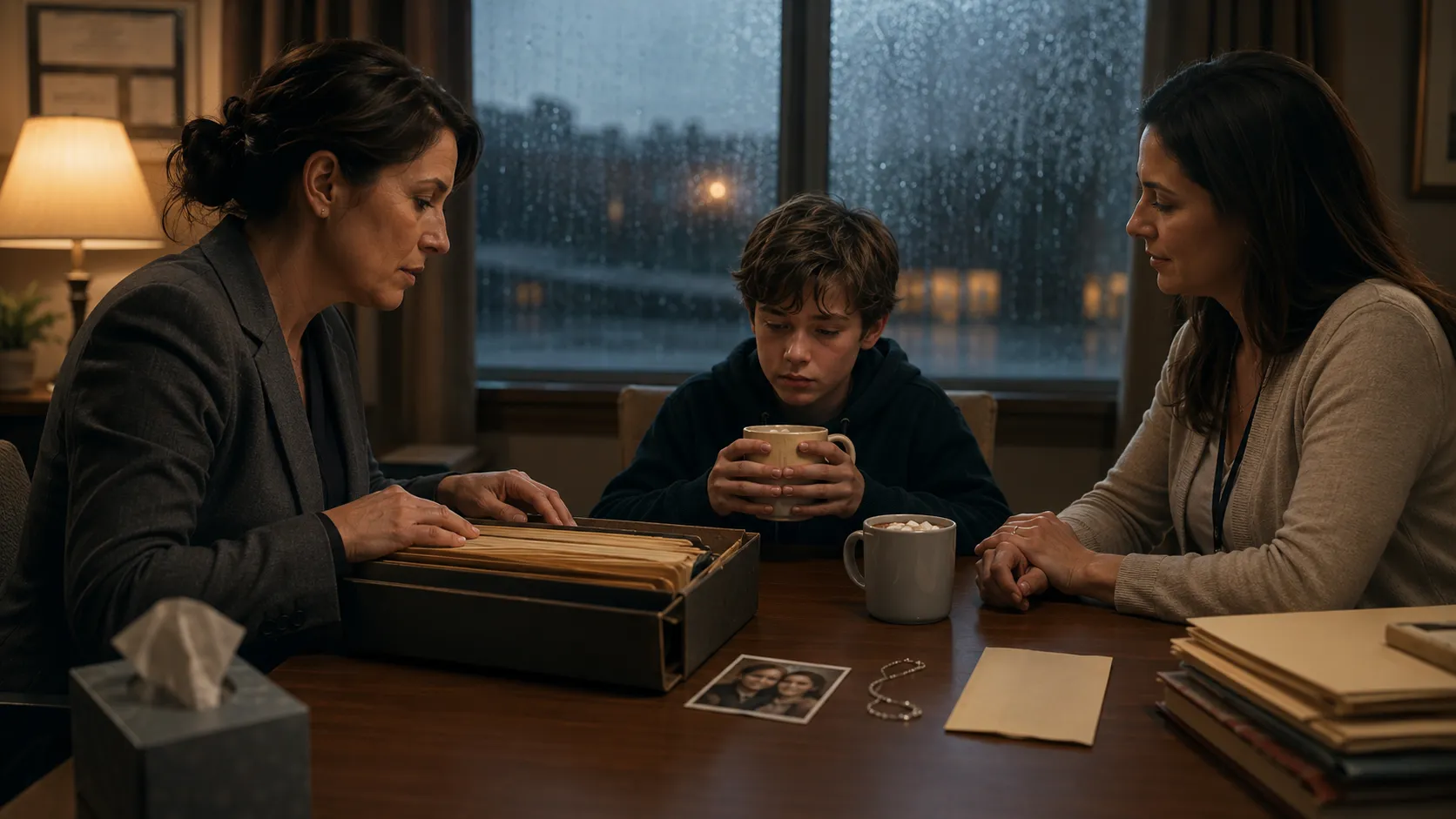
To the infirmary office, where a child advocate named Helen Price sat with him while Mara brought the box.
Ethan stared at it.
“Is she in there?”
Mara sat across from him.
“Part of what she left is.”
He touched the silver necklace first.
His fingers closed around it.
“My mom wore this.”
“I know.”
“Did they kill her?”
Mara did not lie.
“I think they did. I’m going to prove it.”
Ethan nodded as if he had already known.
Then Mara handed him the letter.
His name was on the front.
ETHAN
He stared at it for a long time.
“I don’t know if I can read it.”
Helen said softly, “You don’t have to tonight.”
Ethan looked at Mara.
“Can you?”
Mara felt her throat tighten.
“If you want me to.”
He nodded.
So Mara opened the letter.
Her voice stayed steady until the second line.
My beautiful boy,
If you are reading this, then I failed to come home the way I promised.
Ethan shut his eyes.
Mara continued.
I need you to know something before anyone tells you different. You are not bad. You are not broken. You are not what frightened adults write in files when they are too lazy or too guilty to tell the truth.
You are my son.
You are gentle when you think no one sees. You feed the neighbor’s cat even though it scratches you. You cry when old songs come on the radio because you say the singer sounds lonely. You ask questions that make grown men uncomfortable.
Never be ashamed of that.
I found something terrible at Blackstone. I tried to stop it the proper way. I wrote reports. I called offices. I followed rules. The rules led me back to the people doing the terrible things.
So I made copies.
If they take me, the truth is hidden where hungry places keep their bones.
You’ll understand one day.
Ethan began to cry silently.
Mara’s voice broke but she kept reading.
If they hurt you to keep me quiet, I am sorry. Not because I chose wrong, but because the world made a child pay for an adult truth.
Listen to me, Ethan.
The anger you feel is not evil.
The fear you feel is not weakness.
But do not let them turn you into the monster they need you to become. That is how places like Blackstone win.
Find someone who asks the right question.
Tell them the truth.
And when it is over, live.
Not for revenge.
For me.
For you.
For the boys who did not get to leave.
I love you more than every locked door in the world.
Mom
No one spoke after Mara finished.
Ethan held the necklace against his chest and bent forward until his forehead touched his knees.
He did not scream.
He did not move furniture with his mind.
He did not become the frightening thing Blackstone had invented to explain its own crimes.
He wept like a child.
And that, Mara thought, was the most human sound the building had ever heard.
The truth about Marcus Kane came two days later.
He was found alive in an abandoned maintenance tunnel beneath the old medical wing, dehydrated, shaking, and curled beside a locked service hatch.
He had not been beaten by Ethan.
Not exactly.
The blackout in the cafeteria had been triggered by a failing electrical system tied to the basement wing. During the confusion, Marcus had attacked Ethan again. But before he could hurt him badly, the cafeteria bench collapsed under Marcus’s weight, trapping his arm and breaking his nose when he fell.
The rumors did the rest.
As for his disappearance, the answer was uglier.
Marcus had found out from an older guard that C Block boys were used for “private corrections.” He had tried to trade that information for protection after the cafeteria incident. Instead, someone moved him from the infirmary through the old service corridor and locked him below, hoping panic over Ethan would hide another missing boy.
Marcus confirmed three guard names.
One administrator.
One doctor.
And a man in a gray suit who had visited monthly.
When asked why he originally blamed “her,” Marcus began shaking.
“I heard a woman,” he said. “In the dark. She said if I ever touched that kid again, I’d learn what hungry meant.”
Mara did not include that in the official report.
But she did not forget it either.
Within weeks, Blackstone was shut down permanently.
Children were moved under outside supervision. Staff were suspended, arrested, or placed under investigation. Families filed lawsuits. The governor held a press conference full of grave words and careful outrage.
Mara did not attend.
She was in the interview room with Ethan.
A prosecutor wanted another statement.
Ethan sat beside Helen, both hands wrapped around a paper cup of hot chocolate.
The prosecutor asked, “Did you ever harm Raymond or Linda Cole?”
Ethan shook his head.
“What happened in the foster home?”
He looked at Mara.
She nodded gently.
Ethan swallowed.
“They knew about Blackstone.”
The room went still.
“My foster father got money from someone. He said I was worth more if I acted crazy. He locked me in the basement when I asked about my mom. He said she died because she couldn’t mind her business.”
Helen closed her eyes.
Ethan continued, voice thin but steady.
“That night, he was drunk. Linda was crying. They fought because he said men from Blackstone were coming to take me back early. I ran to the kitchen. He grabbed me. I picked up the knife because I was scared.”
“Did you stab him?”
“No.”
“What happened?”
“He fell.”
The prosecutor frowned.
“Fell?”
“Linda pushed him.”
Mara looked up sharply.
Ethan’s eyes filled.
“He hit his head on the stove. Then the curtains caught fire. Linda tried to get me out, but there was smoke everywhere. She kept saying she was sorry. She got me to the back door.”
“What happened to her?”
Ethan’s voice broke.
“She went back for the files.”
The room fell silent.
“What files?” the prosecutor asked.
“The ones my mom gave her.”
Mara leaned forward.
“Linda had your mother’s files?”
Ethan nodded.
“She was scared of Raymond, but she wasn’t like him. She said she didn’t know how bad it was until she read them. She said she was going to help me.”
“And the knife?”
“I still had it when I got outside. The police saw it. Nobody listened after that.”
Mara stared at the table.
Another woman dead.
Another woman who tried too late but still tried.
Another story flattened into “dangerous child” because that was easier than investigating adults.
The charges against Ethan were dismissed six weeks later.
Not reduced.
Dismissed.
The judge looked at the state prosecutor and said, “This court will not continue punishing a child for the failures of every adult who touched his case.”
Ethan did not smile when he heard it.
He only looked tired.
Outside the courthouse, reporters shouted his name.
“Ethan, did you kill anyone?”
“Ethan, are the ghost stories true?”
“Ethan, what happened in Cell Block C?”
Mara stepped in front of him.
“He’s a child,” she said sharply. “Move.”
Helen guided Ethan into the car.
As they pulled away, Ethan looked through the back window at the cameras.
“They still want me to be scary,” he said.
Helen touched his shoulder.
“Because scary is easier than guilty.”
He thought about that.
Then nodded.
Ethan went to live with Helen temporarily while permanent placement was arranged.
At first, he barely slept.
He kept food under his bed. He flinched when doors closed too loudly. He counted exits in every room. He refused to sit with his back to a hallway. At night, Helen sometimes found him standing in the kitchen whispering toward the dark window.
She never asked who he was speaking to.
Not immediately.
One winter night, three months after Blackstone closed, Helen found him sitting at the kitchen table with Rebecca’s necklace in his hands.
“Couldn’t sleep?” she asked.
He shook his head.
She warmed milk, though he said he hated warm milk and then drank all of it.
Finally, he asked, “Do you believe people can stay after they die?”
Helen sat across from him.
“I believe love can.”
“That’s not what I asked.”
“No,” she said. “It’s the answer I have.”
He looked down.
“Sometimes I hear her.”
Helen kept her voice calm.
“Your mother?”
He nodded.
“Does that scare you?”
“Not her.”
“What scares you?”
“That maybe I made her up because I needed someone.”
Helen’s eyes softened.
“Ethan, needing someone does not make what you feel fake.”
He considered that.
“She says I don’t have to be hungry anymore.”
Helen reached across the table, slowly enough that he could pull away.
He did not.
She covered his hand with hers.
“Then we’ll make sure you aren’t.”
The lawsuits took years.
The criminal trials took longer.
Former staff lied. Administrators blamed budgets. Doctors blamed protocols. Contractors blamed subcontractors. State officials blamed oversight gaps, as if gaps opened themselves and swallowed children without help.
Mara testified again and again.
So did Marcus Kane.
So did three boys who had survived Cell Block C and were now trying to become more than case numbers.
Ethan testified only once.
He was fourteen then.
Taller.
Still thin.
Still quiet.
He walked into the courtroom wearing a gray sweater and Rebecca’s necklace under his shirt. Helen sat behind him. Mara sat near the aisle. Marcus Kane sat on the opposite side, older now and sober, his large hands folded tightly.
When Ethan took the stand, the defense attorney tried to make him look unreliable.
“You claimed to hear your dead mother’s voice, correct?”
Ethan looked at him.
“I said I missed her.”
“That isn’t what I asked.”
“No,” Ethan said. “But it is what you’re trying to use against me.”
The courtroom went silent.
The attorney adjusted his papers.
“You were known at Blackstone as unstable.”
“I was known at Blackstone as dangerous because dangerous children are easier to ignore than abused ones.”
Mara lowered her eyes to hide the fierce pride in them.
The attorney tried again.
“Did you or did you not tell staff that Blackstone was hungry?”
Ethan looked toward the jury.
“My mother said Blackstone was hungry because it kept taking children and asking for more money to do it.”
He paused.
“Everyone laughed at that until they found the room.”
The jury listened.
That mattered.
In the end, convictions came.
Not enough for every wound.
But enough to write truth into the record.
The warden who replaced Briggs permanently was required to testify about destroyed documents. Three guards were convicted of assault, illegal confinement, and conspiracy. Two medical contractors went to prison. A private behavioral company lost its license after investigators found payment structures tied to “disciplinary interventions.”
The man in the gray suit turned out to be a regional director for that company.
He had signed the checks.
He had also approved Ethan’s transfer.
When sentenced, he said, “I never intended for children to be harmed.”
Mara, sitting in the back, whispered, “They never do when harm is profitable enough.”
Ethan grew slowly into a life no one had designed for him.
That was harder than escaping Blackstone.
Freedom was not simple for children who had survived locked doors.
At fifteen, he began going to school regularly.
At sixteen, he joined the art room because the teacher let students work in silence.
At seventeen, he painted a picture that made Helen cry.
It showed a long hallway lined with locked doors.
At the far end stood a woman in a nurse’s uniform holding a lantern.
No face.
Only light.
When Helen asked what it was called, Ethan said, “Where Hungry Places Keep Their Bones.”
The painting won a state youth art award.
Ethan hated the ceremony but liked the scholarship money.
Marcus Kane came to see it.
He stood in front of the painting for almost ten minutes.
Ethan approached carefully.
They had not spoken much since the trials.
Marcus was twenty-one now, out of the adult system after serving time for unrelated charges, working in a mechanic shop, trying to build a life with hands people once feared.
“I’m sorry,” Marcus said without looking away from the painting.
Ethan stood beside him.
“I know.”
“No, you don’t.”
Ethan looked at him.
Marcus swallowed.
“I picked on you because everyone else was scared of you, and I didn’t want to be. That’s the truth. I wasn’t brave. I was embarrassed.”
Ethan said nothing.
Marcus continued, “I thought if I made you small, I’d feel bigger.”
“Did it work?”
Marcus gave a humorless laugh.
“For about ten seconds.”
They stood in silence.
Then Marcus said, “In the tunnel, when they locked me down there, I heard your mother.”
Ethan’s face changed.
“What did she say?”
Marcus looked at him.
“She said, ‘He is still a child.’”
Ethan closed his eyes.
Marcus’s voice broke.
“I think she meant you. But maybe she meant me too.”
That was the closest either of them came to forgiveness.
It was enough.
Years later, Blackstone was demolished.
Not renovated.
Not renamed.
Demolished.
Families gathered outside the fence to watch the first wall come down. Some cheered. Some cried. Some stood silent, holding photographs of boys who had entered Blackstone and never returned whole.
Ethan was nineteen.
He stood beside Helen and Mara near the back of the crowd.
He had been invited to speak but refused.
“I don’t want to give that building my voice,” he said.
So Mara spoke instead.
She kept it short.
“This building taught us what happens when children are treated as problems to manage instead of lives to protect. May no locked door ever again be allowed to hide what adults are doing in the name of discipline.”
Then the machines began.
The first strike hit the east wall.
Concrete cracked.
Dust rose.
A few people clapped.
Ethan watched the wall fall and felt nothing at first.
That frightened him.
Then Helen took his hand.
Something in his chest loosened.
He was not back inside.
He was outside.
The wall was falling.
That was enough.
As the building came down, Ethan thought he saw a woman standing near the old Cell Block C window.
Dark hair.
Nurse’s coat.
Silver necklace.
He blinked.
She was gone.
But near his ear, softer than dust, came a voice he knew better than any prayer.
Live.
Not for revenge.
For me.
For you.
For the boys who did not get to leave.
Ethan did.
He studied social work first, then law, then child advocacy. He did not become loud. He did not become easy. He still hated crowded rooms and people who asked questions they did not intend to hear answered.
But he became useful.
At twenty-eight, Ethan Morris — he had taken back his mother’s name — opened the Rebecca Morris Center for Children in Custody.
Not a shelter.
Not a detention facility.
A legal and psychological advocacy center for children accused of violent crimes, children in state custody, children labeled dangerous before anyone asked what danger had been done to them.
Above the front desk hung a small framed sentence from Rebecca’s letter:
YOU ARE NOT WHAT FRIGHTENED ADULTS WRITE IN FILES.
Mara joined the board after retirement.
Helen ran family placement services.
Marcus Kane volunteered twice a week teaching basic mechanics to teenagers who trusted engines more than adults.
On opening day, a reporter asked Ethan, “Do you still think about Cell Block C?”
Ethan looked at the building behind her.
Children were entering through the front door with advocates beside them.
No chains.
No orange jumpsuits.
No guards calling them monsters.
“Yes,” he said.
“What do you remember most?”
The reporter expected horror.
Blackouts.
Messages.
Disappearances.
The boy from the rumors.
Ethan gave her the truth instead.
“I remember being hungry,” he said.
“For food?”
He paused.
“For someone to ask the right question.”
The reporter lowered her microphone slightly.
“What question?”
Ethan looked toward the entrance, where a small boy in a gray hoodie stood frozen, afraid to step inside.
Ethan walked over and knelt in front of him.
The boy stared at the floor.
“I didn’t do what they said,” the child whispered.
Ethan’s throat tightened.
He had heard that sentence in his own voice years earlier.
He kept his voice calm.
“Then we’ll start there.”
The boy looked up.
“You believe me?”
Ethan did not answer too quickly.
Belief was not a slogan.
Belief was work.
So he said, “I believe you deserve to be heard before anyone decides what you are.”
The boy nodded slowly.
Then stepped inside.
That evening, after the center closed, Ethan sat alone in his office with Rebecca’s necklace in his palm.
Rain touched the windows.
The room was quiet.
On his desk sat a photograph of his mother, one of Helen, one of Mara, and one old newspaper clipping showing the demolition of Blackstone.
Beside them was a small piece of brick from Cell Block C.
Not as a trophy.
As evidence that some doors had existed and could be torn down.
The lights flickered once.
Ethan looked up.
For a moment, he saw her reflection in the dark window behind him.
His mother.
Not pale.
Not frightening.
Not hungry.
Just tired and kind and proud.
He closed his hand around the necklace.
“I’m living,” he whispered.
The reflection faded.
Outside, the rain continued.
Inside, the doors stayed unlocked.
And the boy everyone once feared became the man who asked children the question no one had asked him soon enough:
“What happened to you?”