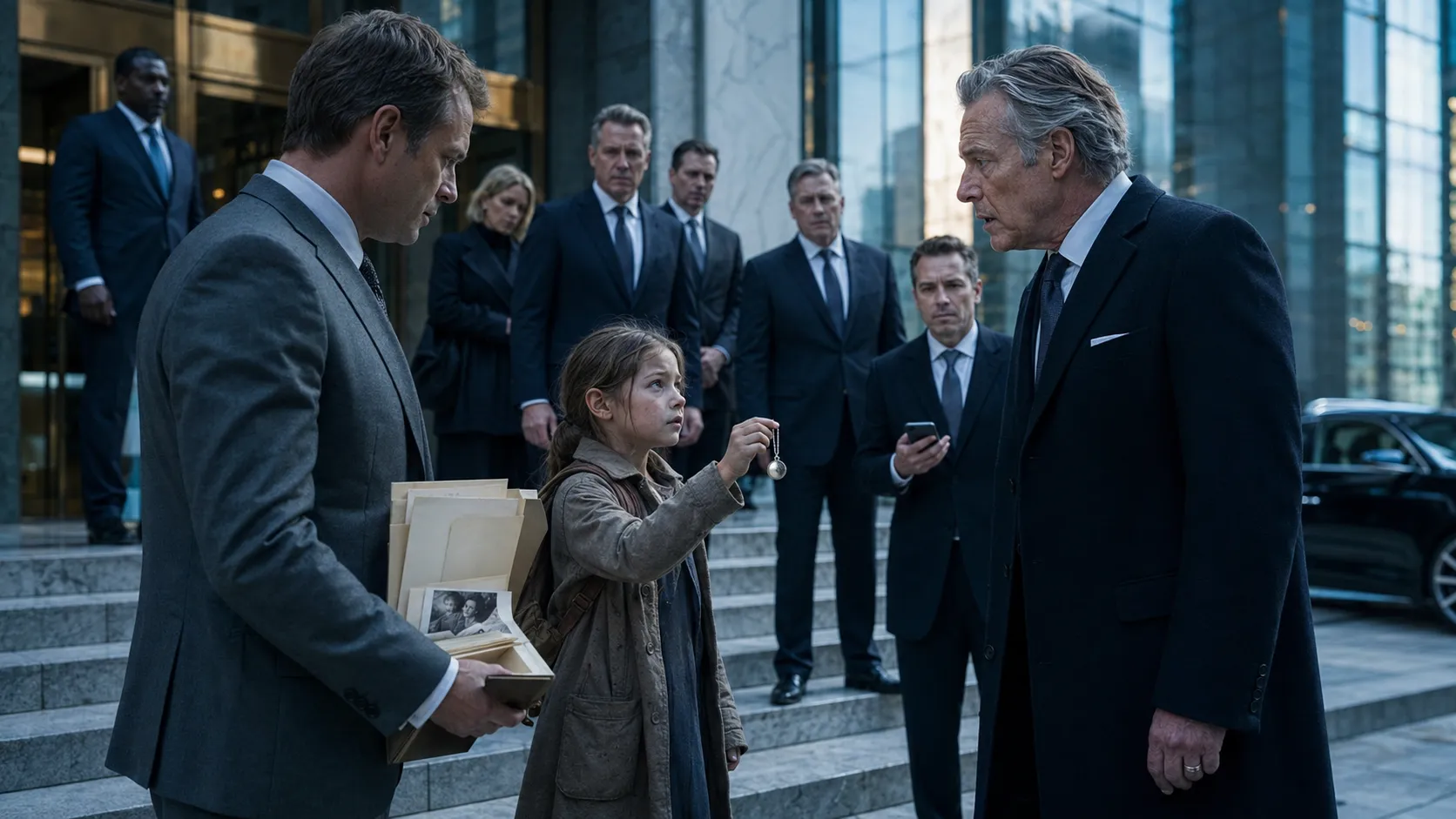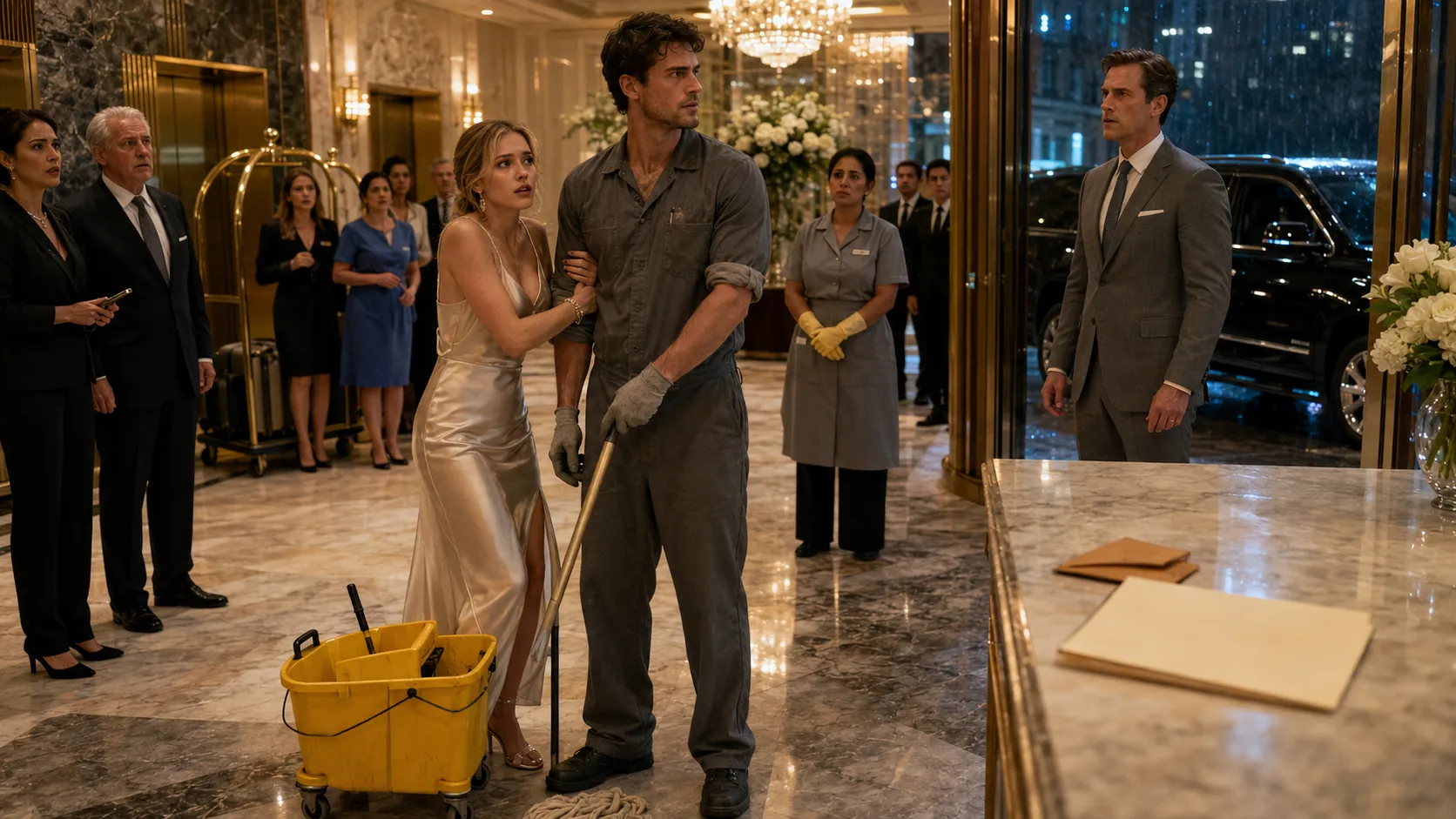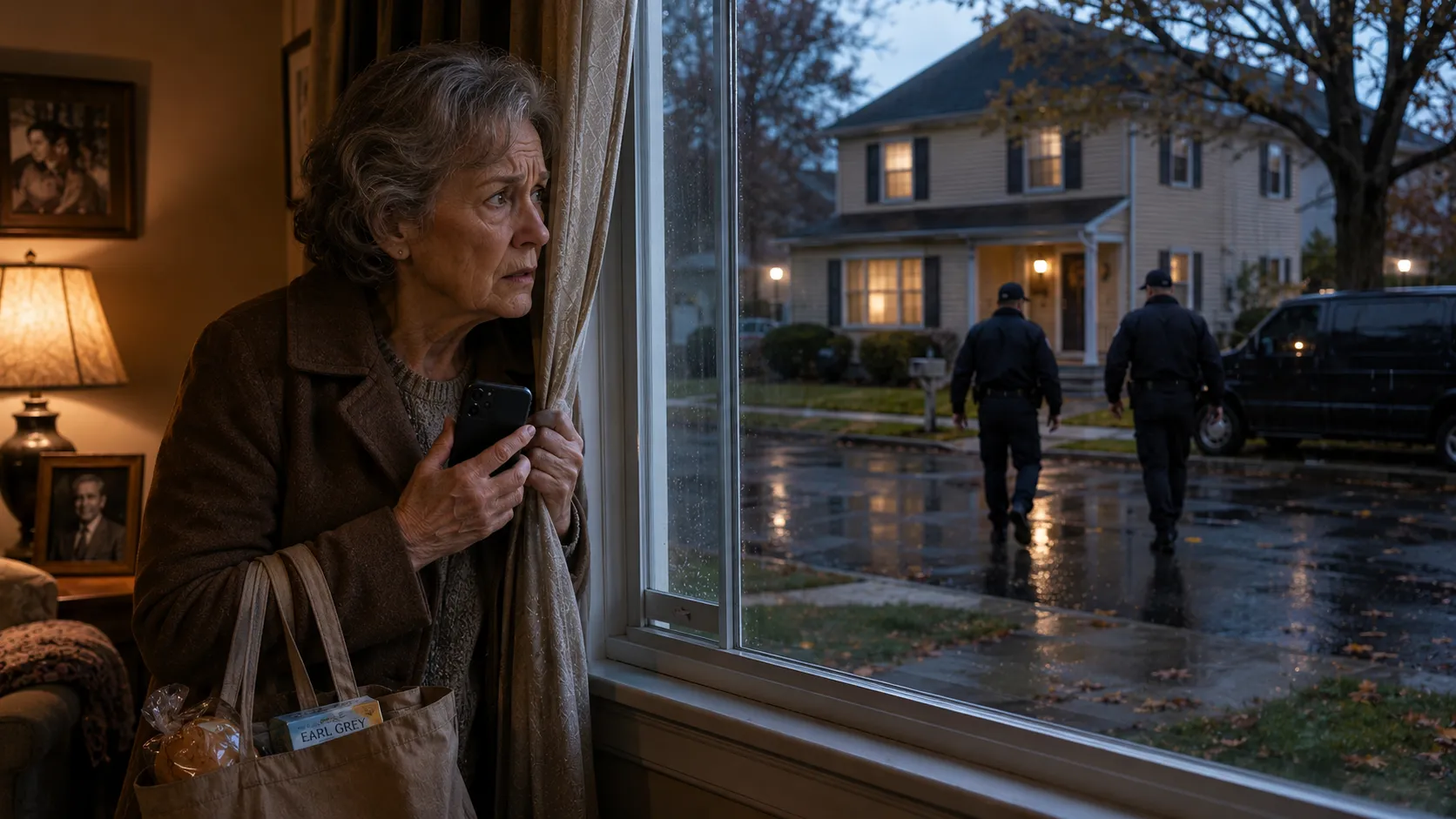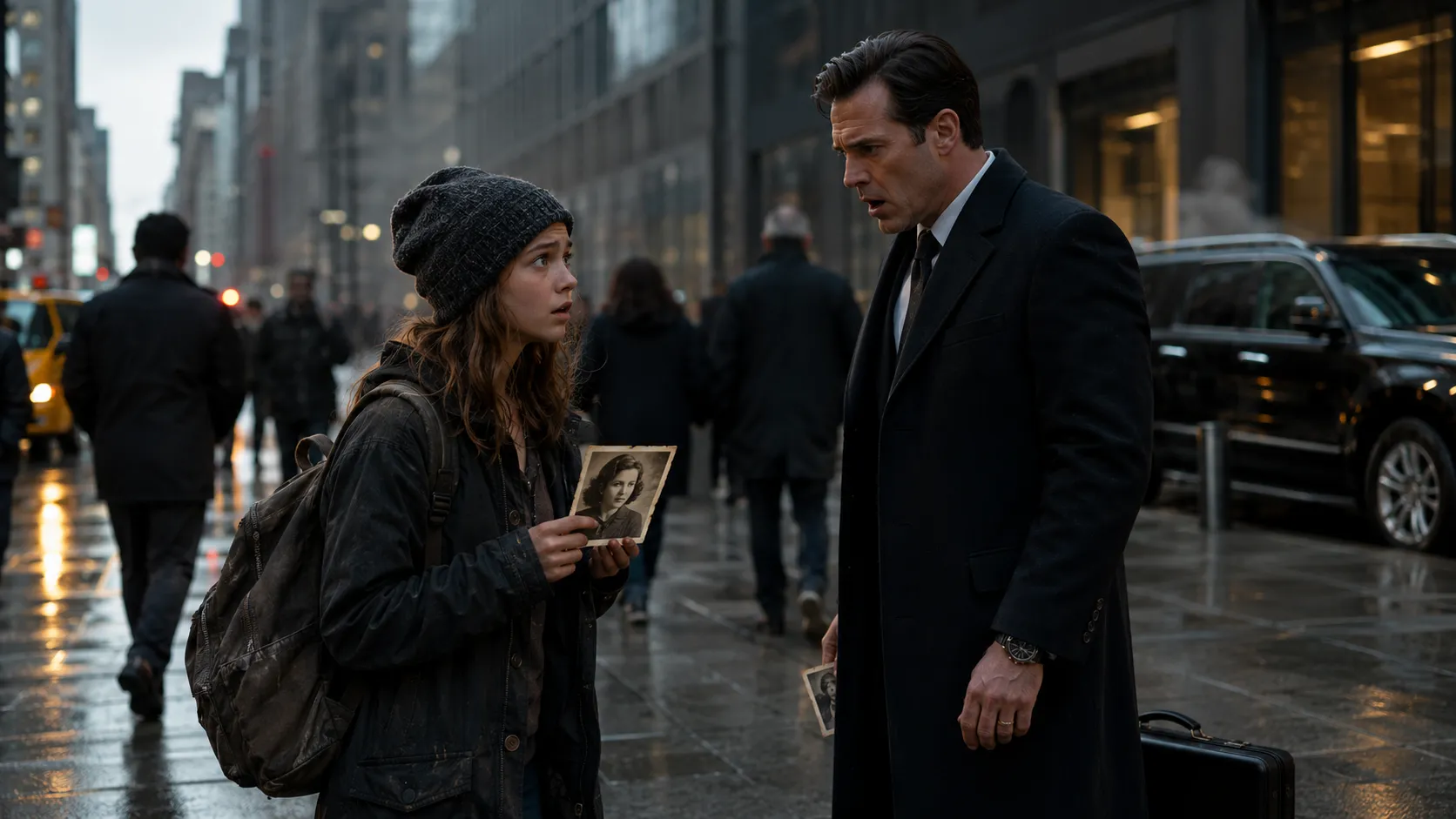
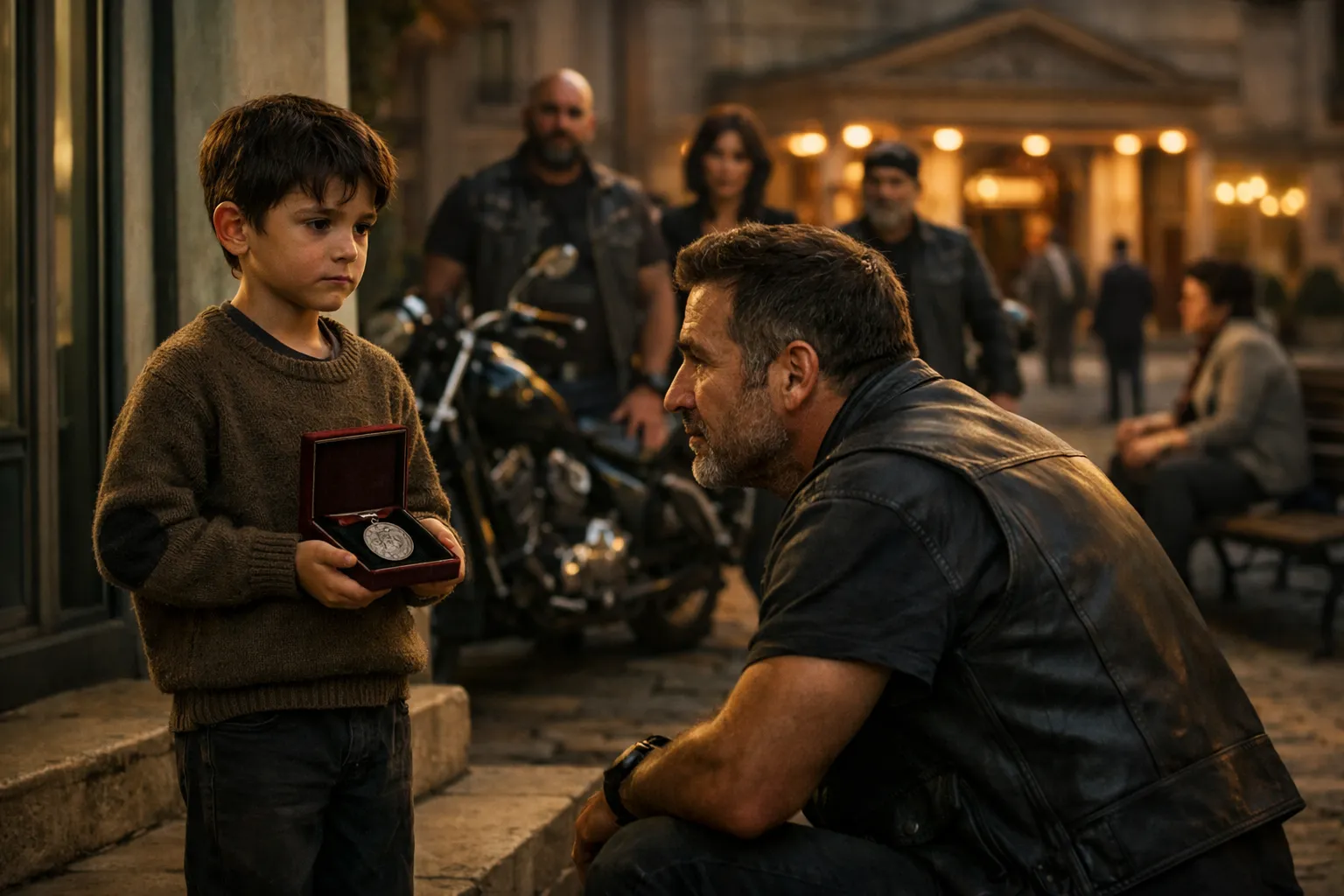
Tommaso was only nine when he stood outside a pharmacy trying to sell his father’s medal for his mother’s insulin. But when the Red Hawks recognized the name engraved on the silver, looked up, and saw a gala poster honoring that same dead hero under the smiling face of a wealthy businessman, the whole town was forced to confront a cruelty far worse than poverty: the theft of a man’s sacrifice after his family had already paid for it in full.
The medal looked too heavy for the boy holding it.
That was the first thing Rocco noticed when the Red Hawks rolled into Piazza Bellini just after five in the afternoon.
Not the cracked velvet box.
Not the cardboard sign resting against the boy’s knees.
Not even the stillness in his face — that eerie, disciplined stillness children only learn when they are trying very hard not to cry in public.
It was the weight of the medal.
Silver. Round. Old-fashioned. Hanging from a ribbon that had once been crimson and now looked tired, dark, and faded, like dried blood left too long in the sun. It belonged in a museum, or in a frame above a mantel, or pinned to the chest of a dead man in a photograph.
It did not belong in the shaking hands of a little boy in a patched sweater.
Rocco slowed first.
The other three bikes slowed with him.
The engines dropped to a low growl as the Red Hawks turned their heads toward the pharmacy steps. Across the square, the bells from the municipal theater had just fallen silent. People in evening clothes were drifting toward the entrance, laughing too loudly, adjusting ties, checking invitations. Everything smelled faintly of perfume, gasoline, and roasted chestnuts from the corner cart.
The boy couldn’t have been older than nine.
Thin shoulders.
Dark hair cut too short, probably with kitchen scissors.
A clean face, but not one recently cared for.
The kind of careful posture children adopt when they are trying to hold themselves together in front of strangers.
He was holding the sign as though the sign embarrassed him more than the medal did.
It read:
FOR SALE
And beneath that, in smaller letters squeezed into the lower corner like honesty arriving too late to stop desperation:
MY DAD’S MEDAL
Rocco stopped the bike completely.
So did the others.
Across the square, the theater doors stood open under a massive glossy banner. On it, businessman Alessandro Vieri smiled toward some imaginary horizon with one hand over his heart, the way rich men smile when they want a town to confuse wealth with virtue.
Above him, in gold letters, were the words:
HEROES NEVER FORGOTTEN GALA
Hosted by Alessandro Vieri
And below that:
Benefiting the Marco Rinaldi Family Hero Fund
Rocco looked at the poster.
Then at the medal.
Then back at the poster.
His jaw tightened before he had even swung his leg off the bike.
Because he knew the name Marco Rinaldi.
Everybody in town knew it.
Twelve years earlier, Marco Rinaldi had gone back into the Vieri dye warehouse a second time after the beams were already screaming. He had dragged two trapped workers out on the first pass. On the second, he found Dario Pozzi — the same Dario who now rode third in the Red Hawks line, bald as a streetlamp and twice as stubborn — pinned under a fallen steel shelf.
Marco pushed him out.
Then the roof came down.
The town made speeches for three days.
The paper called him the bravest man in Lombardy.
Alessandro Vieri cried for cameras and promised the dead man’s widow and infant son would never be forgotten.
Rocco had stood in the back row at the memorial and watched that silver medal placed into a crying woman’s hands.
And now that child was on a pharmacy step trying to sell it.
Rocco crouched in front of him.
“What’s your name?”
The boy looked down, then up, then past Rocco, as if checking whether there might still be some safer adult available.
There wasn’t.
“Tommaso.”
Rocco nodded once.
“How much?”
Tommaso’s fingers tightened around the velvet box.
“I don’t know,” he said.
Rocco frowned.
“You’re selling it, but you don’t know the price?”
Tommaso swallowed.
“I just need enough.”
“For what?”
The answer came softer than the traffic noise at the edge of the piazza.
“For my mama’s insulin.”
No one spoke.
Tommaso lifted his chin a little, the way children do when dignity is the only thing they have left.
Then, almost in a whisper, he added:
“Please, sir… my mama needs her insulin.”
Across the square, nobody moved.
Not the florist carrying peonies toward the theater.
Not the women stepping out of the bakery.
Not the waiter smoking beside the alley.
Even Ada, who had once broken a man’s nose with a bike lock and now stood beside her motorcycle like she might break the whole town if it gave her reason, stayed very still.
Rocco followed the boy’s glance.
Under the pharmacy awning, half-hidden behind a promotional display for cough syrup, a woman sat on the bench with both hands clasped too tightly over her coat. Her face was gray with exhaustion. A paper pharmacy bag rested beside her, empty and crumpled inward. Her hair had fallen from a low knot. Her shoes were old but carefully cleaned. Even from across the square, Rocco could see the faint tremor in her shoulders.
She was not drunk.
She was not resting.
She was trying not to faint in public.
Rocco crossed to her.
Ada got there first and handed her a bottle of water from her saddlebag.
The woman tried to refuse it.
Ada simply stared until she took it.
“Thank you,” the woman said, voice rough with embarrassment.
Rocco took in the details automatically: black slacks, service shoes, a white blouse under the coat — and clipped to the torn seam of the coat, where someone had ripped it off too fast, the remains of a catering pass.
“You worked at the gala,” he said.
Her mouth twitched once.
“Until an hour ago.”
As she lifted the water bottle, a crumpled ivory envelope slipped from her coat onto the pavement.
Rocco bent and picked it up.
The paper was heavy. Expensive. Embossed at the top with the Vieri crest.
Inside were two documents.
The first was what he expected after seeing the ripped pass: a formal termination notice.
Sofia Rinaldi
Immediate dismissal for misconduct, insubordination, and theft of confidential company material.
The second page was worse.
An invoice.
Champagne package.
Imported shellfish selection.
Floral arch surcharge.
String quartet extension.
Late-night dessert service.
At the top, in block letters:
CHARGE TO: Marco Rinaldi Family Hero Fund
Rocco read it once.
Then again.
Then he looked up at Alessandro Vieri’s smiling face on the banner.
The same crest.
The same name.
The same fund.
The man had cut off Marco Rinaldi’s widow, denied her insulin, fired her from the event, and billed his vanity gala to the charity fund named after the husband who had died saving one of his own men.
Rocco folded the papers carefully and handed the envelope back to Sofia.
“When did you see this?”
She laughed once — not from humor, but from the exhaustion of someone too tired to pretend shock anymore.
“When he shoved the wrong envelope at me.”
Tommaso had crossed the square by then, still holding the medal box open like a wound.
Rocco looked at him.
“Close that.”
The boy obeyed instantly.
“Did you go to the pharmacy first?” Rocco asked Sofia.
She nodded.
“The account was frozen. They said the fund card attached to my name had been suspended three months ago. I never received notice.” Her eyes flicked down toward the invoice. “I got notice today.”
Ada’s face changed.
Not to pity.
To anger.
“Why were you fired?”
Sofia hesitated.
Not because she didn’t know.
Because poor people spend half their lives trying to decide whether the truth is worth the price of saying it.
“I was helping steam table linens in the upstairs hall,” she said at last. “The office door was open. I saw the fund name on a stack of invoices. My husband’s name. I thought it was a mistake.” She swallowed. “I asked Alessandro Vieri’s accountant if those charges belonged somewhere else.”
Rocco already knew the rest.
“He heard you.”
She nodded.
“He said men like my husband die once and should stop costing money afterward.” Her voice broke only slightly. “Then he told me if I was too sick to stand straight, I was too sick to be visible near his guests.”
Tommaso looked down at the medal and said nothing.
The whole square seemed to hold its breath.
Rocco turned to Dario — the man Marco Rinaldi had pulled out of a burning warehouse with his bare hands.
“Go buy the insulin.”
Dario was already moving.
“To the pharmacy?”
“To every pharmacy in town if you have to.”
Ada knelt in front of Tommaso and took the medal box gently from his hands.
“We’re not selling this.”
The boy didn’t argue.
Maybe because her voice made it sound like a law of nature.
Maybe because for the first time all day, someone larger than him seemed offended on his behalf.
Rocco looked back at Sofia.
“Can you stand?”
She tried.
Failed.
He caught her before pride could turn the fall into something uglier.
“I don’t want charity,” she said through clenched teeth.
Rocco glanced toward the theater.
“Good,” he said. “Neither do I.”
The grand foyer of Teatro Bellini had been dressed for absolution.
White linen.
Gold-lit banners.
Tall arrangements of cream roses and winter greenery.
Champagne balancing in crystal flutes.
A string quartet playing something tasteful and expensive beneath the staircase while Alessandro Vieri stood in the center of it all greeting donors beneath the enormous banner bearing Marco Rinaldi’s name.
On the stage behind him stood a glass display case.
Inside it sat a polished replica of the very medal Tommaso had nearly sold.
Beneath it, a caption card read:
COURAGE IS THE LIGHT WE LEAVE BEHIND
Rocco stopped dead when he saw it.
Dario swore under his breath.
Ada laughed once, but there was no joy in it.
“He made a trophy.”
Tommaso stared at the display case, then at the closed velvet box in Ada’s hand, and his face shifted in that terrible way children’s faces do when they realize the adults in charge have not merely failed them.
They have used them.
Rocco bent toward him.
“You stay beside your mother.”
Tommaso nodded.
Then the four Red Hawks started walking.
Not fast.
That was the power of it.
Leather vests.
Heavy boots.
Scarred faces.
One sick widow.
One child carrying a dead hero’s name in a velvet box.
And behind them, the kind of silence that spreads before disaster is named.
The quartet faltered first.
Then stopped altogether.
Every conversation snapped at once.
Alessandro Vieri saw them coming and smiled in the reflexive way men smile when they believe the room still belongs to them.
Then he saw Sofia.
Then Tommaso.
Then the velvet box.
Then the Vieri envelope in Rocco’s hand.
And the smile died.
“Who let them in?” he demanded, still soft enough for politeness to pretend it was intact.
Rocco did not answer.
He walked straight to the center display table and set the crumpled ivory envelope down beside the champagne tower.
Then he took the medal box from Ada, opened it, and placed the real medal on top of the invoice so everyone in the first three rows could see the engraved name:
Marco Rinaldi
The room went still enough to hear the ice settling in glasses.
Vieri took one step forward.
“This is inappropriate.”
Rocco looked at him without blinking.
“So is billing oysters to a dead man’s hero fund.”
The nearest donor lowered her champagne.
A second guest pulled out a phone.
A local councilman visibly paled.
Vieri’s jaw clenched.
“You’re confused.”
“No,” Rocco said. “Confused is what that boy was outside the pharmacy when he thought his father’s medal might be worth enough to keep his mother alive.”
Tommaso flinched at hearing himself brought into the room, but Sofia placed a hand on his shoulder and held it there.
Vieri changed tactics.
He turned toward the donors with open palms and a soft, reasonable smile.
“An internal accounting misallocation,” he said. “Unfortunate, but hardly—”
Dario stepped forward.
“There is no such thing as a misallocation where I come from.”
He pointed at the medal.
“Marco Rinaldi dragged me out of your warehouse before it collapsed. I remember his face. I remember your promises. I remember his widow holding that medal while you told the whole town his family would never be abandoned.”
A murmur moved across the room.
Because dozens of people there had heard that promise too.
And because memory becomes dangerous when someone speaks it in front of the right audience.
Vieri’s eyes flicked toward security.
No one moved.
Not yet.
Because the journalist from La Provincia was already filming.
Because the mayor’s wife had gone visibly rigid.
Because the theater director had recognized the crest on the invoice and now looked like he wanted the floor to open under him.
Sofia found her voice before Vieri could recover.
“You cut off the card for my medicine three months ago,” she said. “You never told me. Today you fired me because I saw these charges.” She touched the invoice, then the medal, then looked directly at him. “My son stood outside trying to sell his father’s honor while you stood under his name asking for applause.”
That line broke the room.
Not because it was theatrical.
Because it was exact.
You could see it happen.
People re-sorted themselves morally in real time.
Who they had arrived beside.
Who they now wished they had not.
A woman from the hospital board stepped forward.
“This fund receives municipal matching money.”
A banker from the second row said too loudly, “Then that’s fraud.”
The local journalist zoomed in closer.
Vieri’s expression hardened.
“You have no idea how nonprofit event administration works.”
Ada smiled thinly.
“You mean hungry widows and dead firefighters don’t understand accounting?”
Then she lifted the invoice and read the first line directly into the still-live microphone at the stage podium.
“Imported shellfish selection for two hundred guests.”
A few people actually laughed.
Not because it was funny.
Because disbelief needs somewhere to go.
Ada continued.
“Champagne tower. Floral arch. Late-night desserts.”
Then she lowered the page and looked at Alessandro Vieri.
“Your hero fund bought you flowers while his son tried to sell a medal for insulin.”
No one comes back from a sentence like that.
Not in a small town.
Not under cameras.
Not under a dead man’s name printed in gold.
One elderly volunteer from the fire brigade stepped out from near the coat check, tears already standing in her eyes.
“I collected donations for that fund,” she said. “Every winter.”
The room shifted again.
Now it was no longer scandal.
It was ownership.
These people had touched the lie with their own hands.
Tommaso, who had been silent until then, stepped away from his mother and walked to the display case holding the replica medal.
He stopped beside it, small and furious and heartbreakingly straight.
Then he said, not loudly, but clearly enough for every microphone to catch:
“That one isn’t his.”
Every face in the room turned.
Tommaso looked at the replica.
Then at the real medal.
Then at Alessandro Vieri.
“You put my papa in a glass box,” he said. “But you didn’t feed us.”
The silence that followed was absolute.
Even Vieri knew that answering a child then would only make him smaller.
So he said nothing.
And that, strangely enough, was the most useful thing he did all evening.
Because once the powerful stop speaking, the rest of the truth rushes in.
The hospital board member called the treasurer on speaker.
The mayor demanded the invoices.
The theater director asked who had approved the billing code.
A second volunteer said winter distributions had quietly been cut in half.
The line of waiters along the wall started whispering.
Then the pastry chef set down his tray and said, “He told us to keep leftovers away from the staff exit.”
Vieri rounded on him.
“You will regret—”
“No,” Rocco said. “He won’t.”
Quietly.
Absolutely.
“Because tonight everyone saw you before the cameras got edited.”
The financial crimes unit froze the fund by morning.
By noon, the story was everywhere.
Not just the gala.
Not just the invoice.
Not just the donor outrage.
The image that traveled furthest was simpler than all of it:
Tommaso in a patched sweater, standing beside the fake display medal while the real one lay on the table between the invoice and Alessandro Vieri’s hand.
The caption under the photo in three different papers was some version of the same thing:
Hero’s Son Tried to Sell Medal for Mother’s Insulin While Fund Paid for Gala
Once that image existed, the rest became paperwork.
And there was plenty of paperwork.
Misused nonprofit funds.
Reassigned expense codes.
Municipal money redirected toward luxury event costs.
Letters quietly ending widow assistance while public speeches insisted the fund remained active.
Two accountants blamed each other.
Then emails appeared.
Then more emails.
Sofia got her insulin that night.
Not from Vieri.
From the pharmacist, who refused payment and then publicly apologized for honoring a frozen fund card when common sense should have mattered more.
The Red Hawks paid for groceries before Sofia could protest.
Then the fire brigade did.
Then the parish.
Then half the town, once shame had loosened enough wallets.
What mattered was that nobody called it charity to her face.
Rocco made sure of that.
“This isn’t mercy,” he told the first reporter who tried the word. “This is repayment with interest.”
Vieri was charged three weeks later.
Not for cruelty.
Cruelty rarely gets handcuffs.
But fraud does.
Diversion of nonprofit funds. Misuse of municipal matching grants. False event accounting. Labor violations. Wrongful dismissal.
The gala photos disappeared from the theater website.
The banner came down.
The replica medal was removed from its case and handed over to the fire brigade museum, where it sat in a back office under a sheet until someone could decide what to do with a symbol built from stolen honor.
The real medal went home with Tommaso.
Rocco carried it there himself.
Not because the boy couldn’t.
Because some things deserve an escort back.
When they reached Sofia’s apartment above the shuttered tailor shop, Tommaso took the velvet box, stood in the doorway, and hesitated.
“I almost sold it,” he whispered.
Sofia knelt, still weak but stronger now, and took his face in both hands.
“No,” she said. “You tried to save me.”
Tommaso looked down.
Rocco, standing awkwardly with his helmet under one arm because tenderness always made him feel too large for rooms, cleared his throat.
“Your father would know the difference.”
That finally made the boy look up.
Rocco nodded toward the medal.
“It’s only metal if the town forgets why it was given. Tonight it remembered.”
Months later, when the winter relief fund was rebuilt under new oversight, the fire brigade asked Sofia if Tommaso would attend the memorial night for fallen volunteers.
He said yes before she could.
Town hall was smaller than the theater.
Truer, too.
No champagne tower.
No white roses higher than a man’s shoulder.
No smiling politician borrowing somebody else’s sacrifice.
Just candles. Damp coats. Chairs too close together. Men and women who had actually known Marco Rinaldi when he was alive enough to laugh.
At the front of the room stood a new wooden sign.
Not embossed.
Not sponsored.
Not polished enough to lie.
MARCO RINALDI FAMILY FUND
MEDICINE FIRST. SPEECHES LATER.
Rocco laughed when he saw it.
Ada said it was the smartest sentence the town had written in years.
When they called Tommaso’s name, he walked to the front with the medal box in both hands.
Not to sell it.
Not to surrender it.
To pin the medal himself onto the navy display cloth above his father’s photograph.
He did it carefully, tongue pressed against his lower lip, the way children do sacred work when they know it matters.
Then he stepped back.
The medal caught the light.
The room stayed quiet for one long moment.
Then the applause came — not loud, not theatrical, but warm and steady, the sound of something finally being placed where it belonged.
Tommaso turned toward the front row where Sofia sat stronger now, coat buttoned, color back in her face, a small paper bag of insulin beside her chair like an unremarkable miracle.
When he smiled at her, it was the first smile anyone in town had seen on his face that wasn’t trying to be brave.
And when Rocco looked at the medal, the boy beneath it, and the woman who had survived long enough to witness both, he thought the same thing he had thought that first afternoon in the square:
Some stories don’t spread because they’re clever.
They spread because the wrong people got too comfortable, and then a child stood in exactly the wrong place for them with the one honest thing they had never managed to price.