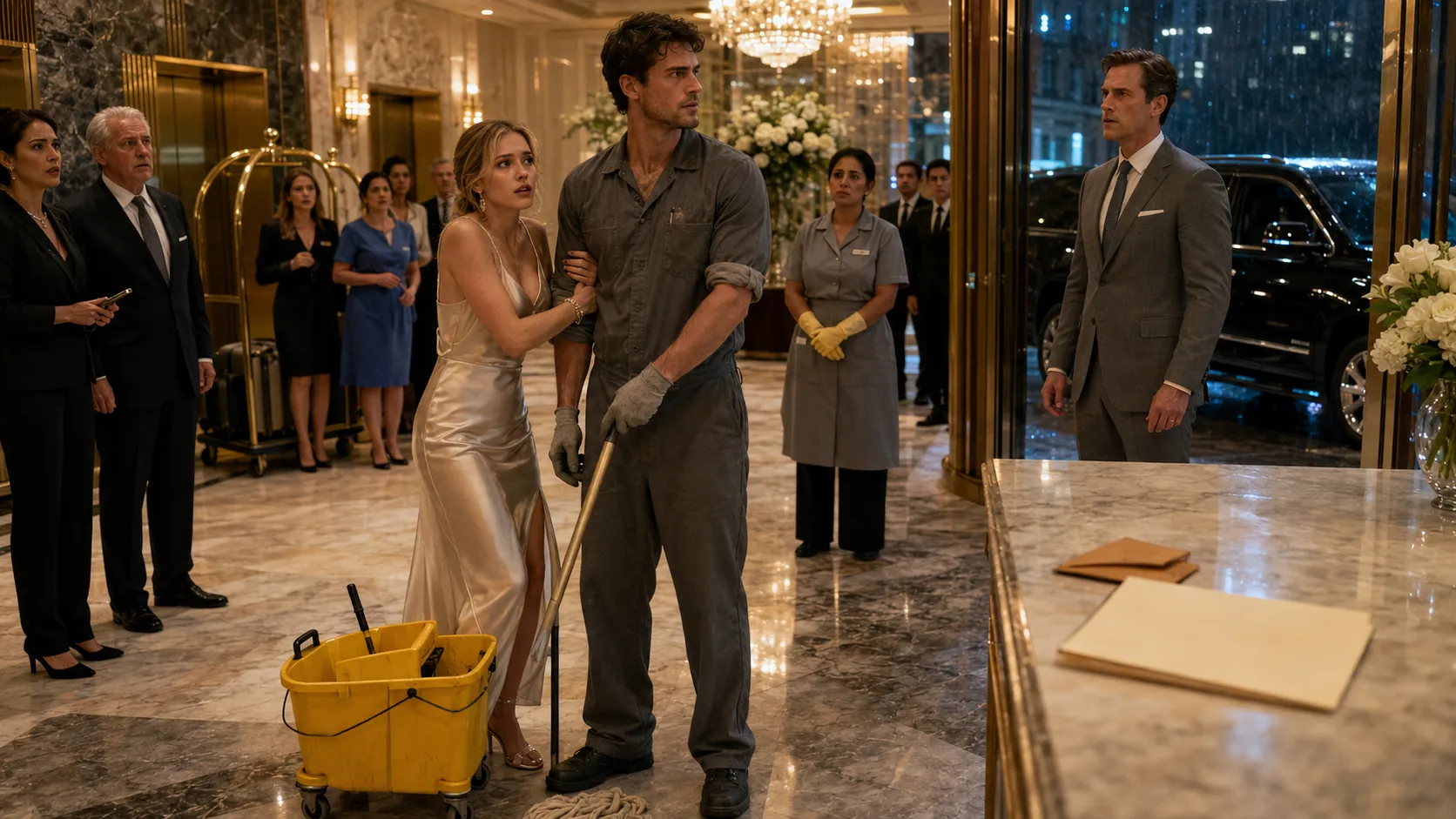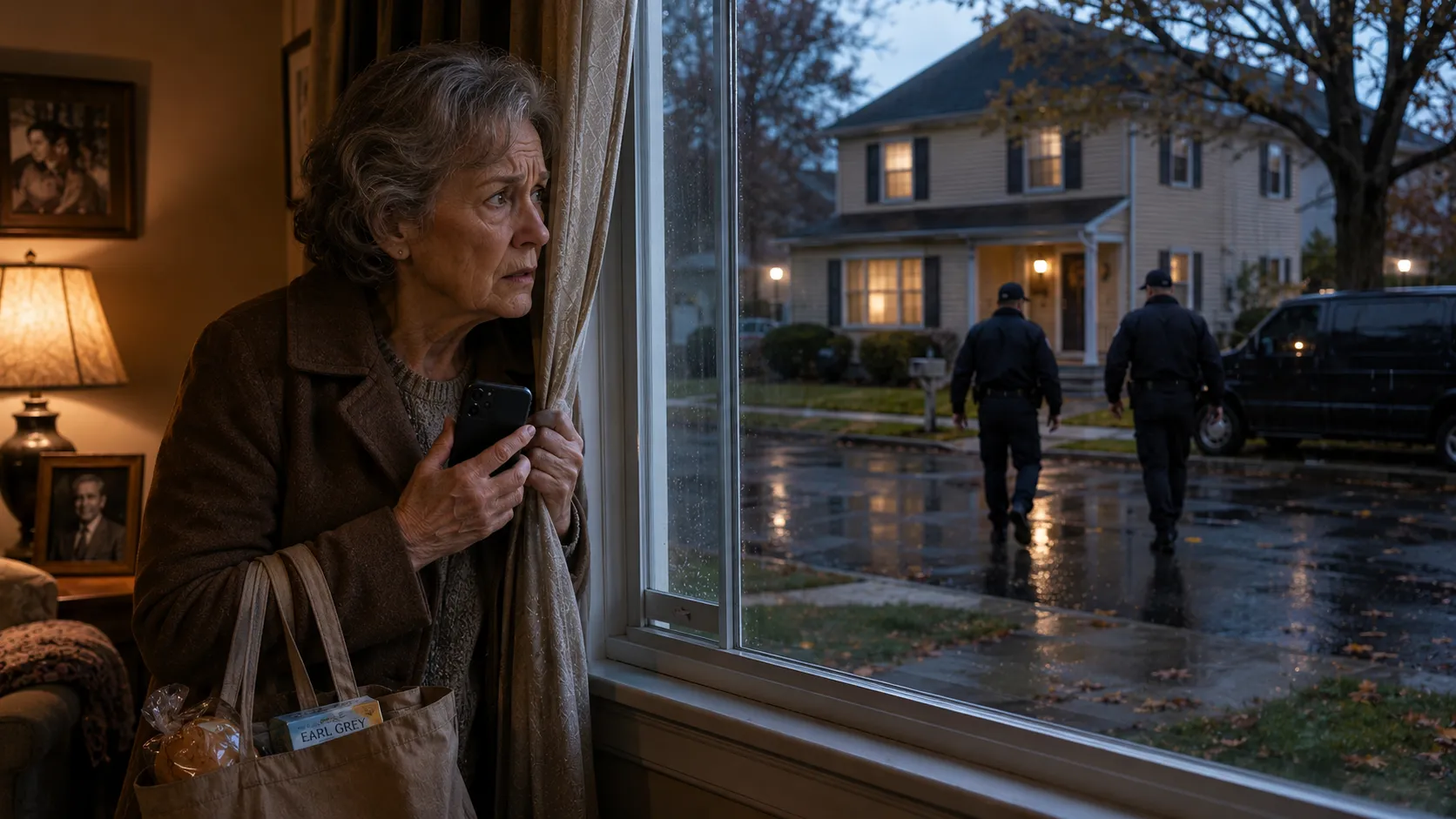

Russell Hargrove thought his nanny had become a danger to his son after she collapsed in the nursery and hid a serious heart condition from the family. But when his three-year-old boy stopped eating, stopped laughing, and kept staring out the window for the woman he loved, one sleepless father finally replayed the footage from that day — and discovered that the real threat had never been Naomi at all.
Russell Hargrove heard his son scream before he even reached the staircase.
Not the ordinary cry of a tired child.
Not frustration.
Not the quick burst of tears that fades the moment a favorite toy is found or a parent appears.
This was different.
Sharp.
Frantic.
Desperate enough to make his whole body go cold before his mind had time to understand why.
He dropped his briefcase by the front door and took the stairs two at a time, his pulse slamming in his throat so hard it hurt. By the time he reached the nursery, his breathing was ragged and his hands were already shaking.
Then he pushed open the door.
And froze.
His three-year-old son Theo sat on the floor in yellow pajamas, crying so violently he could barely catch his breath. Beside him lay Naomi Keller, the nanny who had cared for him for almost two years. She was stretched across the rug, pale and motionless, one arm bent awkwardly beneath her as if she had fallen without warning and never managed to rise again.
For one terrible second, Russell could not make the scene fit inside language.
Theo was alive.
Naomi was not moving.
A damp washcloth lay nearby.
A thermometer blinked on the floor.
And a tiny blue plastic wheel from a broken toy rested near the edge of the carpet like some meaningless detail his mind would not stop noticing.
He dropped to his knees.
Theo had angry red marks around his neck, but he was breathing. Naomi’s pulse, beneath Russell’s trembling fingers, felt faint and uncertain.
He called for help with the kind of voice people use only when the world has already begun to split open.
Moments later, Darlene Pike — the longtime house manager, efficient and composed in every ordinary crisis — appeared in the doorway with one hand against her chest and fear in her face.
“Mr. Hargrove, what happened?”
“I don’t know,” he said. “I just found them like this.”
Darlene looked from Theo to Naomi and back again.
“I’ve been worried about her lately,” she said softly.
At the time, Russell barely heard her.
The paramedics were already coming up the stairs.
In the hospital, truth arrived in pieces.
A paramedic examined Theo and looked up with the kind of serious calm that makes adults more afraid, not less.
“Your son was choking.”
Russell stared at him.
“What?”
“There are fresh marks on his throat. Someone performed the Heimlich maneuver very recently.”
Russell turned instinctively toward Naomi, who was being lifted onto a stretcher while machines and hands moved around her faster than his thoughts could follow.
She hadn’t hurt Theo.
She had saved him.
That realization struck him so hard it almost made him dizzy.
Then another medic quietly pointed out an older mark on Naomi’s wrist, something that looked like an injection site, and suspicion entered the room before compassion had fully found its footing.
By the time the ambulances reached the hospital, fear had already begun doing what fear does best:
rearranging gratitude into doubt.
Doctors confirmed Theo would be fine.
Then they turned to Naomi.
A silver-haired cardiologist eventually approached Russell in the waiting room and gave the diagnosis with blunt gentleness. Naomi had suffered a serious cardiac episode. She had mitral valve prolapse. The effort of saving Theo had likely pushed a fragile heart into dangerous rhythm failure.
Russell sat there stunned.
He had been about to thank her for saving his son.
Instead, he found himself being asked why she had hidden symptoms severe enough that any careful employer should have noticed them long ago.
The truth was simple, humiliating, and impossible to soften:
he had no idea.
He knew mergers.
Land acquisitions.
Insurance structures.
Construction costs across three states.
But he could not tell a doctor when his son had last eaten lunch or how long the woman caring for him had been growing weaker in front of everyone.
That night, when he returned home with Theo asleep against his chest, Darlene’s voice followed him through the silence.
“What if she knew she was unwell and still chose to keep caring for him?” she asked. “Love is one thing. Trust is another.”
He was frightened enough to mistake that sentence for wisdom.
Across town, Naomi woke in a hospital room smelling of disinfectant and fear. The first thing she asked was whether Theo was safe. The answer mattered more to her than the pain in her chest.
Later, when the cardiologist explained the severity of what had happened, Naomi listened without surprise.
She had suspected for months that something was wrong.
But suspicion is a luxury poor people often postpone until after rent, after groceries, after medication for somebody else, after the next bill, after the next day of work that absolutely cannot be missed.
And Naomi had reasons she could not afford to ignore.
When Darlene visited her in the hospital, she came with practiced sympathy and quiet judgment. She asked whether Naomi had known her heart was giving her trouble. Naomi admitted she had symptoms. Darlene finished the sentence for her: she had hidden them because she did not want to lose her job.
“I saved Theo,” Naomi said.
“I know you did,” Darlene replied. “But Mr. Hargrove is frightened. He doesn’t know whether he can trust you anymore.”
Those words cut deeper than the illness.
Three days later, Naomi was discharged.
No one from the Hargrove house came to collect her.
No flowers.
No message.
No goodbye from Theo.
Instead, Russell’s assistant called to tell her that her final paycheck had been processed, two months of severance had been added, and her employment had been terminated effective immediately.
When Naomi asked if she could at least say goodbye to Theo, she was told that Mr. Hargrove believed a clean break was best for the child’s emotional stability.
So Naomi returned to her mother Jean’s apartment with clean clothes, a bruised heart, and another burden she had still not spoken fully aloud.
Her younger brother Eli was nineteen and halfway through leukemia treatment.
He was the reason she had taken the Hargrove job in the first place.
The salary had covered rent.
Medication.
Transport.
All the quiet expenses that pile up around illness until a family stops living and starts surviving.
Then her phone buzzed with the next hospital alert.
The next round of Eli’s treatment had been denied.
Back in her small apartment, Naomi tried to act normal.
Eli, pale beneath a blanket on the couch, looked up and smiled when he saw her, because that is what people do when they know someone they love has come home already carrying too much.
“You’re home early,” he said.
She hugged him and lied gently.
“Yeah. I’m home.”
That night she applied for jobs until the questions on the screen blurred together.
Reason for leaving your last position.
References.
Availability.
Medical restrictions.
Eventually she closed the laptop and cried in the kitchen where no one could hear her.
Across town, the Hargrove mansion had become even quieter than before.
Theo barely ate.
He did not laugh.
He spoke less each day.
Darlene’s niece Amber, brought in as a polished replacement, was kind enough on paper and useless in practice. Theo shrank from her. At night he stood at the nursery window staring into the dark as if waiting for someone who had promised to come back.
One evening, Russell sat beside him on the bed and asked the question he had been trying not to ask.
“Do you miss Naomi?”
Theo’s eyes filled instantly.
He did not say anything.
He didn’t have to.
That night, at two in the morning, sleep still refusing him, Russell went into his study and opened the home security archive.
He found the nursery footage from the day Naomi collapsed and played it from the beginning.
There she was, seated on the floor with Theo, smiling over a pile of blocks. Theo lifted something small and blue to his mouth. Naomi noticed immediately. She moved fast — faster than fear, faster than thought — pulled him close, struck his back, performed the Heimlich, and the little plastic wheel flew across the room. Theo burst into frightened tears. Naomi checked his breathing, kissed his forehead, laid him gently on the rug —
and only then collapsed.
Russell watched it once.
Then again.
The third time, he saw what he had missed.
Three minutes after Naomi hit the floor, the nursery door opened.
Darlene stepped inside.
She saw Naomi.
She saw Theo crying beside her.
She took in the whole emergency at once.
And then she turned around and walked away.
Russell checked the timestamp twice.
Seven minutes passed before she returned later and pretended to discover the scene.
By morning he was no longer frightened.
He was cold.
He demanded Naomi’s personnel file.
Her reviews had been exceptional for almost two years: warm, attentive, reliable, extraordinary with Theo. Then, over the past several months, the language changed. Fatigued. Behind on tasks. Too many absences. Questionable consistency.
Every one of those notes had been entered by Darlene.
Russell pulled the digital attendance records. Naomi had not been late. She had been early almost every day.
Then he found the medical leave requests.
Five of them.
Over six months.
Each one deleted before ever reaching him.
Same user ID every time.
Darlene Pike.
By afternoon, he had hired a private investigator.
Two days later, the man returned with a thick folder and a face that said the worst part was still ahead. Darlene had hidden previous disciplinary issues from other households. She had repeatedly pushed Russell to replace Naomi with her niece. She had accessed Naomi’s medical requests dozens of times.
And the toy Theo had choked on?
It had been recalled months earlier as a choking hazard.
Purchase records showed it had been ordered through the household account just three days before the incident.
Russell sat very still when he heard that.
Then asked the only question that mattered.
“Where is Naomi now?”
The investigator hesitated.
“Working two part-time jobs. Her brother’s condition is worse. She’s trying to keep his treatment going.”
The shame of that settled into Russell like iron.
He had dismissed the one person who saved his son without hesitation.
He had done it out of fear.
And while his house grew quieter, Naomi had returned to exhaustion, debt, and the possibility of losing her brother.
Less than a week later, Naomi collapsed again.
This time it happened during an extra shift at a coffee shop.
A doctor who already knew her chart and her limits looked at her with the sort of concern that feels almost unbearable when you have no space left in your life for collapse.
“You cannot keep doing this.”
“My brother needs treatment,” Naomi said. “I don’t get to stop.”
That night, the doctor made a phone call.
Russell stood outside Naomi’s hospital room for nearly ten minutes before he could make himself open the door. Theo held his hand and would not let go.
When they entered, Naomi turned her head slowly.
Theo did not hesitate.
“Naomi!”
He ran to her, climbed up beside her, buried his face in her shoulder, and cried the sort of relieved cry children save for people they know will hold them safely through it.
“I missed you,” he sobbed. “I missed you so much.”
Naomi wrapped her arms around him and began to cry too.
Russell remained near the doorway at first, looking like a man who no longer trusted his own right to speak in that room.
When Theo finally drifted to sleep against Naomi’s side, Russell stepped forward.
“I’m sorry,” he said.
Naomi looked at him steadily.
“You fired me over the phone.”
“I know.”
“You didn’t let me say goodbye to him.”
His face tightened as if even repeating it hurt.
“I know. And I will regret that for the rest of my life.”
Then he told her everything.
The deleted leave requests.
The false reports.
The footage.
The recalled toy.
The manipulation.
The seven lost minutes that could have cost Theo his life and Naomi her chance to be believed.
Naomi listened in silence while tears slipped down her face.
When he finished, Russell placed a folder on the tray table.
“Your brother has been accepted into a treatment program at Yale New Haven. Full care. No cost to you.”
She stared at him in disbelief.
“Why would you do that?”
Russell’s eyes filled.
“Because you saved my son while your own heart was failing, and I repaid you with fear. I cannot undo what I did. But I can stop making it worse.”
Three days later, Naomi underwent surgery.
It was serious.
But it succeeded.
Russell paid every bill without speechifying about generosity. He stayed in the waiting room the entire time. Theo held a drawing for Naomi in both hands and refused to leave until a nurse promised she would give it to her when she woke.
That same week, Eli began the treatment program.
Slowly, color returned to his face.
Slowly, Naomi’s body stopped living at the edge of disaster.
Slowly, the future widened enough to breathe inside.
Darlene was arrested after the evidence was turned over.
Amber was dismissed too, though Russell understood she had not known what her aunt had done.
Truth does not repair everything.
But it changes the shape of a house.
Six months later, spring sunlight lay across the Hargrove garden.
Theo ran through the grass chasing butterflies, laughing with the unselfconscious joy Russell had once feared was gone forever. Eli sat nearby in a chair, stronger now, his hair beginning to grow back in soft dark curls. Naomi stood beside him, one hand sometimes drifting to the scar over her heart as if survival still felt too improbable to trust completely.
Russell stepped outside carrying lemonade and sat down beside them.
He had changed too.
He came home earlier.
He listened before deciding.
He paid attention to the details of ordinary days.
He no longer confused distance with strength.
Theo ran back and climbed straight into Naomi’s lap as if that place had always belonged to him.
“Did you see me? I almost caught one!”
“You got very close,” she said, smiling.
Russell watched them for a moment.
Then he spoke carefully.
“I met with my attorney today. If you still want it, I’d like to make your place in Theo’s life permanent.”
Naomi looked up.
“Permanent?”
“Legal co-guardianship.”
Her eyes filled immediately.
“I want that.”
Russell nodded, emotion thickening his voice.
“Good. Because this morning Theo asked me if you were family. I told him yes.”
Theo looked between them and grinned.
“I knew it.”
That night, after Theo was asleep and Eli had gone inside to rest, Naomi and Russell sat on the back porch together while the air cooled around them.
The worst days of their lives were no longer standing right beside them.
Russell looked out over the dark lawn.
“I spent two years thinking I understood my own house,” he said. “But I didn’t see anything that mattered until I almost lost all of it.”
Naomi turned toward him.
“You see it now.”
He nodded.
“Because you kept showing up with love when everyone else made fear seem easier.”
She looked toward the glowing windows where Theo slept safely and Eli was healing.
They were not perfect people.
Not a perfect family.
But maybe that mattered less than what they had built anyway.
Something real.
Something chosen.
Something strong enough to survive truth.
Sometimes the person who saves a house does not arrive loudly.
Sometimes she comes quietly, already carrying more sorrow than anyone knows, and still reaches for a choking child before she reaches for herself.
And sometimes grace begins not when the worst thing is prevented, but when the truth is finally allowed to live where fear used to sit.